

AI that learns, adapts, and evolves in the physical world—long after deployment.
Discover MoreUnderstanding the Concept
AI systems that continuously learn from real-world experience, retain memory over time, and collaborate across machines—adapting to complex, unforeseen physical environments.
AI has transformed industries from healthcare to transportation. However, most current AI systems remain narrow, brittle, and static—constrained by their initial training.
In physical environments—where noise, uncertainty, and edge cases are the norm—these limitations make traditional AI insufficient for true autonomy.
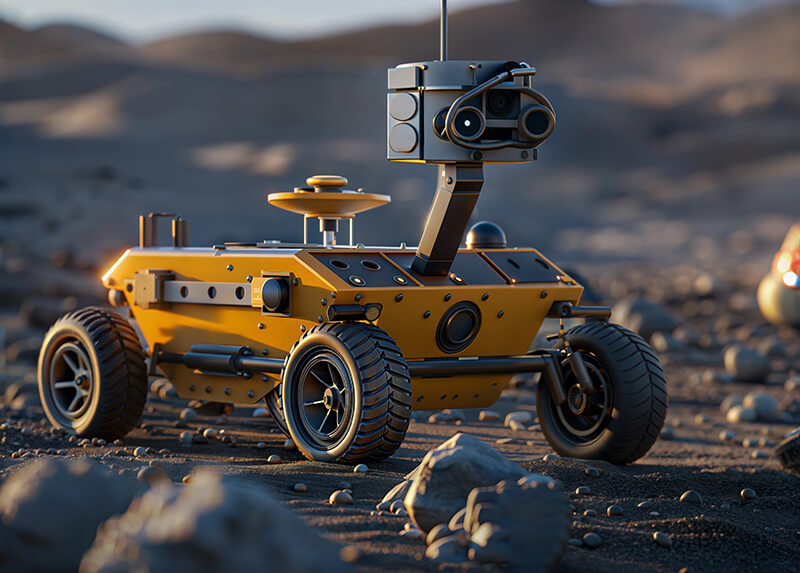
To operate effectively in the real world, AI must evolve beyond static inference engines. CFAMs introduce a new paradigm:
This shift allows intelligence to compound through experience, rather than reset with every update or hardware change.
No single machine can experience the full diversity of the physical world. CFAMs systems collaborate by sharing distilled, validated skills across machines and deployments.
Collaboration transforms individual learning into compound intelligence, enabling systems to become more capable over time.
For AI to truly transform the world, it must be physically embodied—capable of sensing, reasoning, and acting under real-world constraints.
This makes it suitable for environments where failure is costly, connectivity is unreliable, and conditions change unpredictably.
Core Capabilities
Research from DARPA's Lifelong Learning Machines and Shared-Experience Lifelong Learning programs demonstrated that continuous learning AI outperforms static pre-trained models.
Rapid adaptation to new environments without cloud dependency. Intelligence that evolves locally.
Prevents catastrophic forgetting. Builds cumulative intelligence that compounds over time.
Peer-to-peer knowledge sharing accelerates learning across the entire fleet of systems.
Architecture
A unified architecture designed for continuous learning, persistent memory, and collaborative intelligence.
Core intelligence that learns from experience and unifies knowledge across tasks and environments.
Systems that adjust behavior in real time based on feedback from the physical world.
Agents that share learned skills across machines, compounding capability without centralizing control.
CFAMs enable machines to operate autonomously, improve after deployment, and scale intelligence across infrastructure, mobility, and industry—freeing humanity to focus on what matters most.
Get Started


