Skylark Labs

Singh focused on creating AI capable of operating on edge devices like drones and cameras. To achieve this, he studied brain mechanisms at Harvard, MIT, and Brown University, leading to the development of a data and computationally efficient AI, ScatterNet Hybrid Deep Networks. This AI was applied to drones and cameras, tackling safety and security challenges like violence detection in crowded places and Disguised Face Recognition. His work garnered international recognition, including features in media outlets like BBC and on the cover of The Economist.
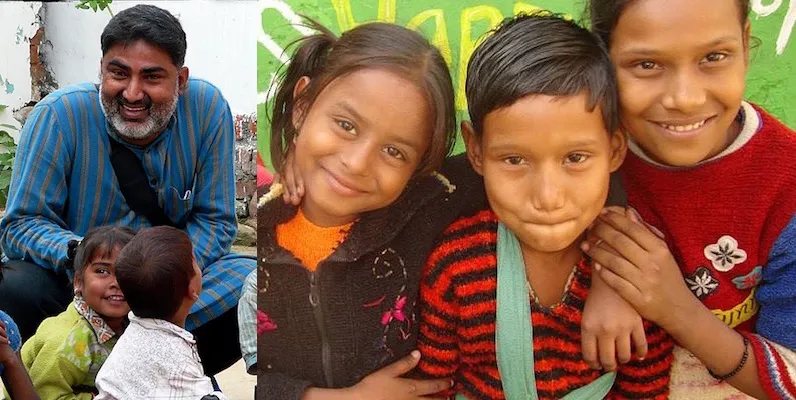
After completing his doctorate, Singh dedicated himself to making a tangible difference in society, focusing on improving safety for its most vulnerable members. He developed software aimed at rescuing trafficked children from brothels in India. This software has aided GURIA India in rescuing 13 minor girls to date. This project, having a significant real-world impact and holding personal importance to Singh, led to his recognition in the MIT 35 under 35 list.
Dr. Singh's experience in defense revealed that AI often struggles with unforeseen scenarios, highlighting narrow AI's limitations. This led him to Stanford's DARPA Lifelong Learning Machines program, where he developed self-learning AI that evolves on the edge, adapting to new and unknown threats. This AI provides early warnings, enhancing safety and security, reducing costs, and minimizing operational disruptions, thus overcoming conventional AI's challenges in dynamic environments.

After Dr. Singh’s tenure at Stanford, I founded Skylark Labs to create a commercial version of self-learning AI. The startup, registered in the US, began its technological development in India, starting in the incubation center of the university where I completed my bachelor's degree, initially with 10 dedicated interns. Over two years, Skylark Labs has expanded to a team of 70, spanning three offices in the US, India, and Australia, gathering most of our team across these locations.

The people behind Skylark Labs
Operators, world-class researchers, and senior national-security leaders building adaptive, on-device AI.
Backed by industry leaders and top-tier venture firms



Singh focused on creating AI capable of operating on edge devices like drones and cameras. To achieve this, he studied brain mechanisms at Harvard, MIT, and Brown University, leading to the development of a data and computationally efficient AI, ScatterNet Hybrid Deep Networks. This AI was applied to drones and cameras, tackling safety and security challenges like violence detection in crowded places and Disguised Face Recognition. His work garnered international recognition, including features in media outlets like BBC and on the cover of The Economist.
After completing his doctorate, Singh dedicated himself to making a tangible difference in society, focusing on improving safety for its most vulnerable members. He developed software aimed at rescuing trafficked children from brothels in India. This software has aided GURIA India in rescuing 13 minor girls to date. This project, having a significant real-world impact and holding personal importance to Singh, led to his recognition in the MIT 35 under 35 list.
Dr. Singh's experience in defense revealed that AI often struggles with unforeseen scenarios, highlighting narrow AI's limitations. This led him to Stanford's DARPA Lifelong Learning Machines program, where he developed self-learning AI that evolves on the edge, adapting to new and unknown threats. This AI provides early warnings, enhancing safety and security, reducing costs, and minimizing operational disruptions, thus overcoming conventional AI's challenges in dynamic environments.
After Dr. Singh's tenure at Stanford, he founded Skylark Labs to create a commercial version of self-learning AI. The startup, registered in the US, began its technological development in India, starting in the incubation center of the university where he completed his bachelor's degree, initially with 10 dedicated interns. Over two years, Skylark Labs has expanded to a team of 70, spanning three offices in the US, India, and Australia, gathering most of our team across these locations.