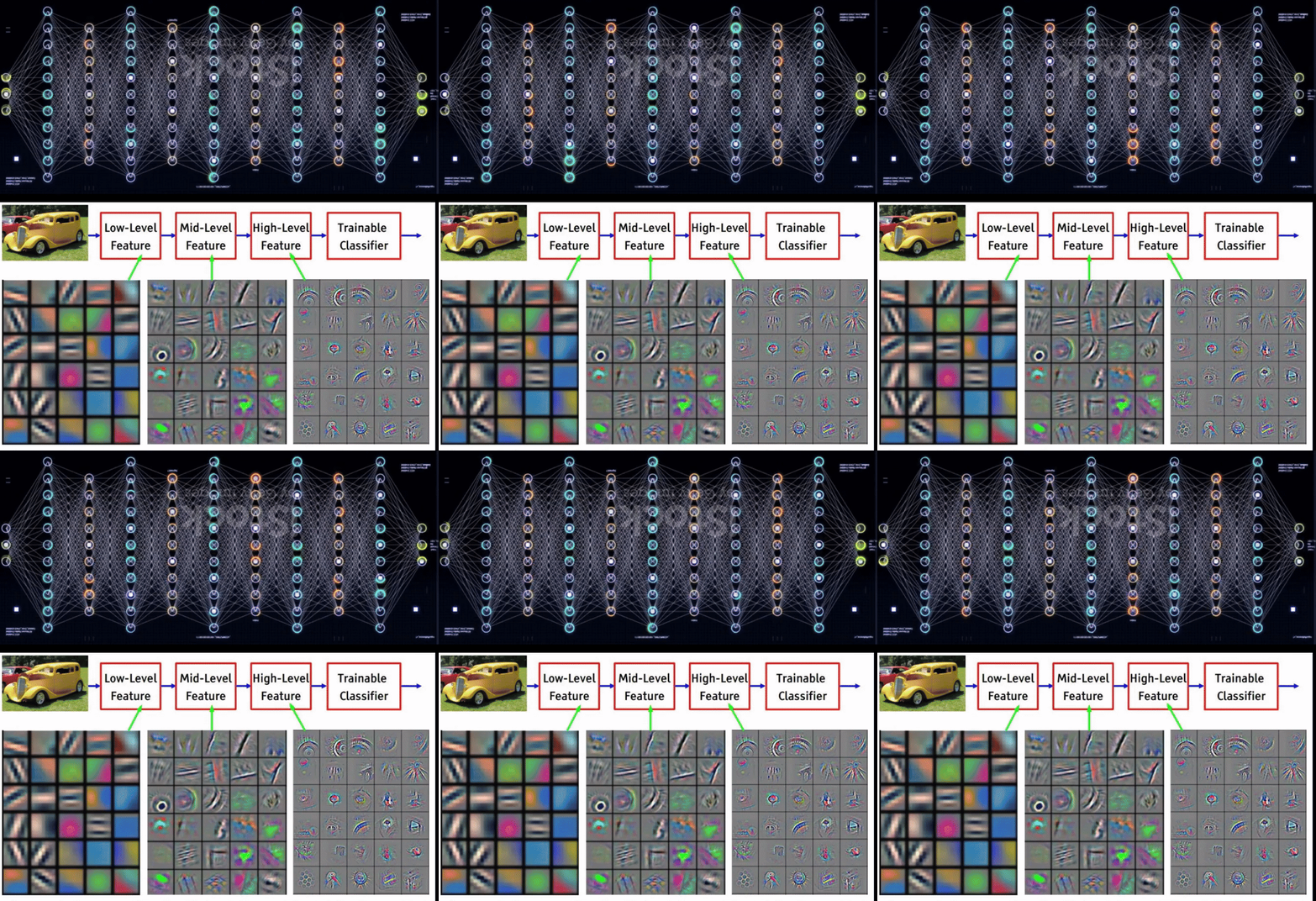
We are living through an era of unprecedented change, driven by Artificial Intelligence. For decades, computers ran on rule-based software — rigid systems that followed pre-programmed instructions and could not learn from experience. Today's AI is fundamentally different: instead of obeying fixed rules, it learns directly from data.
01The AI Revolution: AI replaces rule-based systems.
Unlike traditional software, AI systems can analyze vast datasets to discover hidden relationships, adapt to new situations, and improve their performance over time. This ability to learn from data has shattered previous technological limitations — fundamentally changing how we work, solve problems, and live our lives.
Solving Complex Problems
Accelerating innovation across science and industry.
Automating Workflows
Intelligent systems for safer journeys, end to end.
Improving Everyday Life
Smart automation for next-gen production.
02AI's big problem: evolving systems for a dynamic world.
While AI systems excel at learning patterns from large datasets, they falter when faced with new or evolving situations that fall outside their training. It's akin to teaching someone the general rules of driving but not how to handle a sudden thunderstorm or a roadblock. In dynamic and unpredictable environments, static systems fail to adapt — often with serious consequences.
National security breached.
Static perception pipelines miss tactics they were never trained on — and adversaries probe for exactly that gap.
Lives at stake.
Safety systems built on yesterday's data fail under conditions that didn't exist when they were trained.
Traditional AI retraining cycles are both time-intensive and costly, involving extensive data collection, detailed labeling, substantial computational resources, and redeployment efforts. These cycles lack assurance of effectiveness — there is no guarantee that the specific failure for which the system was redesigned will recur, rendering the process potentially futile.MIT Technology Review — The way we train AI is fundamentally flawed
03AI's next leap: real-time, situation-specific learning on device.
New situations arise constantly, demanding AI that can learn what it needs on the device itself — instantly, without sending data to the cloud or waiting for re-training. By mastering each new scenario as it appears, such systems edge toward general intelligence, adapting to real-world challenges as they unfold.
The gap between current AI and truly adaptive intelligence isn't one we can bridge by simply adding more layers or data. We need to rebuild AI's foundations from the ground up.Ilya Sutskever — The Verge — what Sutskever sees in OpenAI's data
04The need for an architecture built for real-time adaptability.
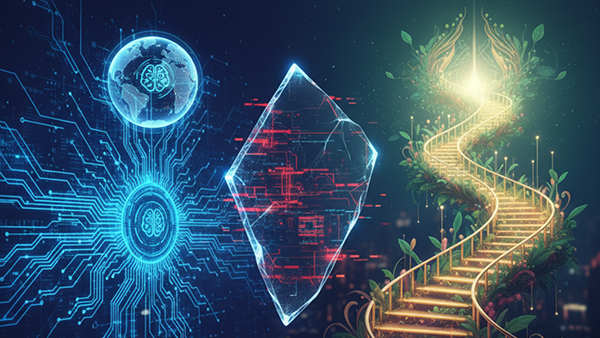
To truly unlock AI's potential, we need new architectures that learn and evolve in real-time, adapting as situations unfold. Real-time adaptability is the path to Artificial General Intelligence (AGI) — AI that can think, respond, and grow alongside humanity.
The push for AGI is already well underway. Top venture capital firms are funding it, and leading academic voices are advocating for it.
05Companies — mostly focused on language models.
The largest AI labs — OpenAI, Anthropic, and Google DeepMind — are all racing to build smarter chatbots and reasoning engines. Their flagship models (OpenAI's o1, Anthropic's Claude, DeepMind's RETRO) are pushing toward human-level comprehension. But they all live inside data centers, working with text and pictures — not the physical world.
While these virtual world achievements are impressive, true AGI must be embodied in the physical world to transform how we live and work. Embodiment is indispensable for AGI.P. G. Keerthana Gopalakrishnan — Google DeepMind
06Skylark Labs — embodied AGI for the physical world.
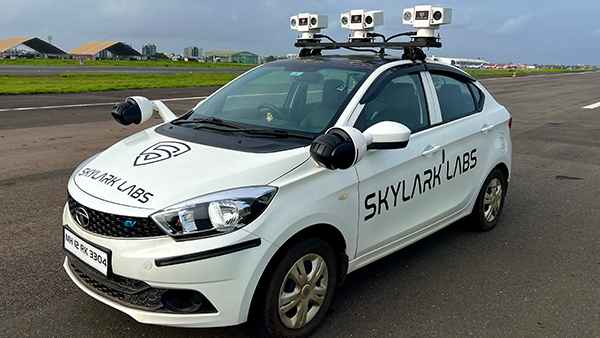
Skylark Labs has developed the world's first AGI for physical security that learns and adapts instantly in the real world. While others focus on training large language models in risk-free virtual environments, our AI ensures real-world protection by adapting on-device from single experiences — just like humans — preventing any security threat from succeeding twice.
Skylark Labs' world-first Embodied AGI technology, powered by a brain-inspired architecture, redefines physical security by adapting instantly on edge devices in real-time to counter new threats without relying on historical data or re-training — ensuring vulnerabilities are never exploited twice. This groundbreaking dataset-free adaptation has revolutionized physical security for clients across defense, public safety, and transportation.Amarjot Singh, PhD — Founder, Skylark Labs
This fundamental shift in AGI development means security systems no longer need to wait for retraining cycles or depend on massive datasets to address new threats. Our edge-based technology learns from each experience as it happens — creating truly adaptive physical security solutions that continuously strengthen their defenses in the real world. It marks the next evolution in AGI for physical security applications.