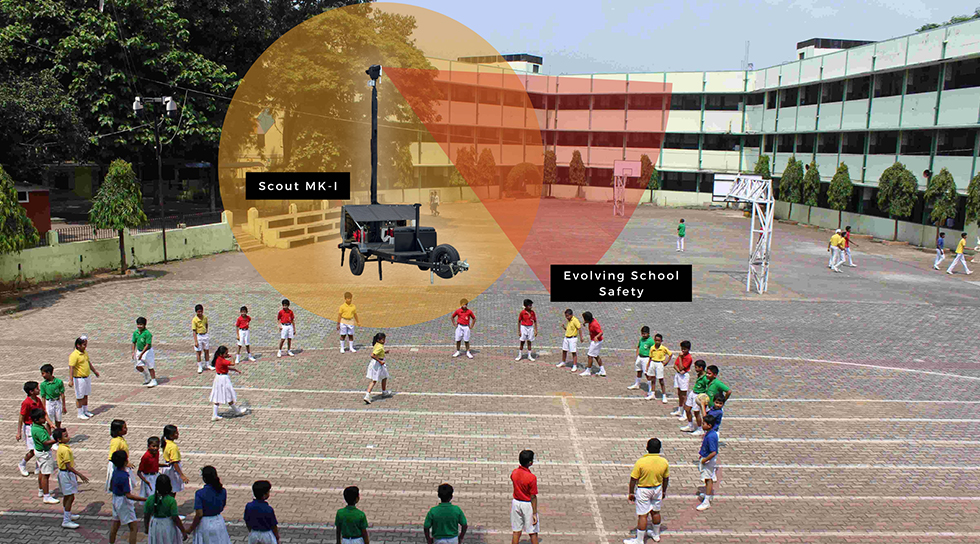
University campuses present unique security challenges: sprawling open spaces, dense crowds, irregular schedules, and a population that values both safety and civil liberties. Skylark Labs' 20-ft Scout AI Towers address these constraints through LiDAR-first adaptive AI that detects threats in real time without compromising student privacy.
01Why University Security Needs a New Approach.
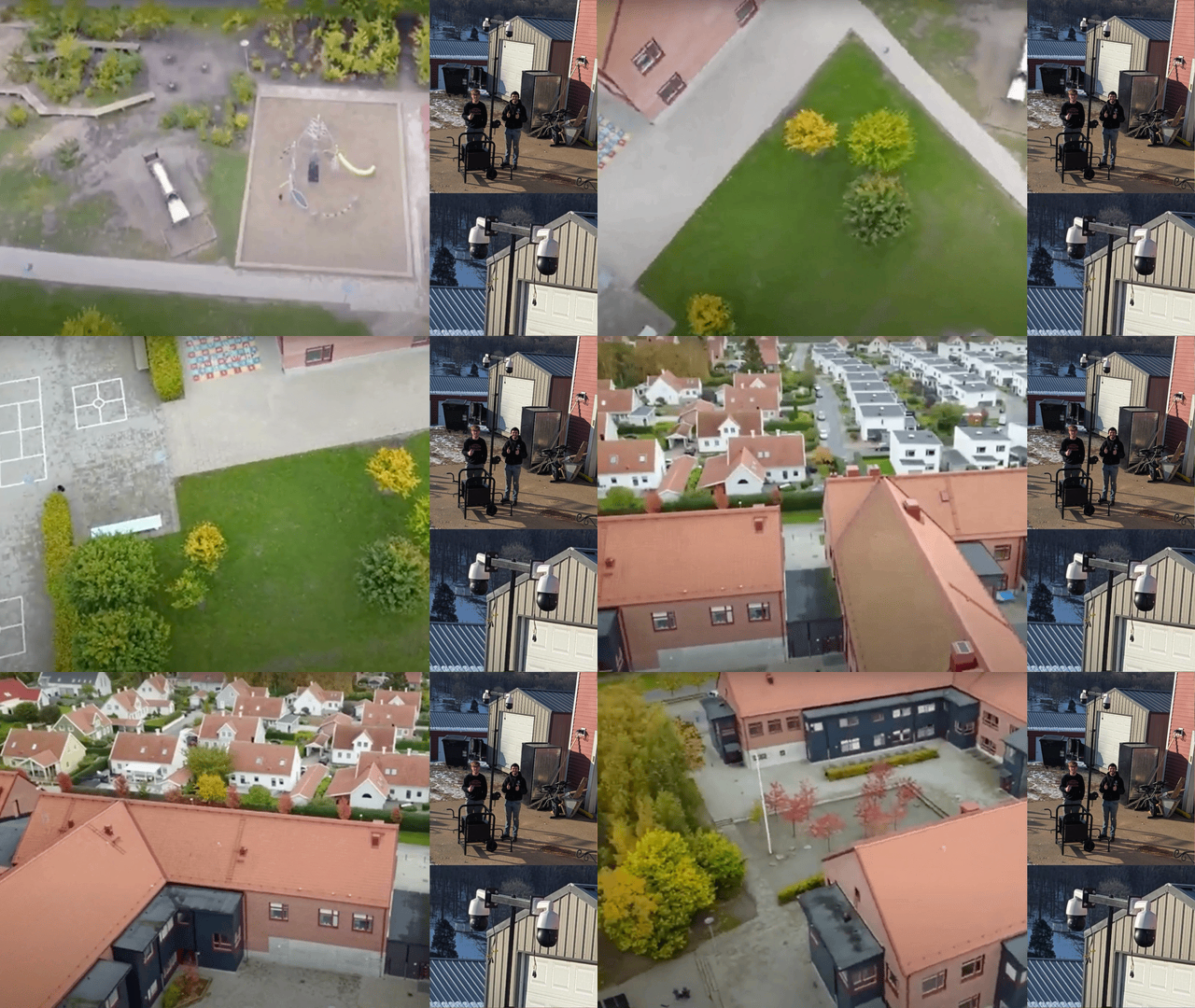
University campuses are open environments with thousands of people moving through buildings, open-air quads, and parking structures at unpredictable intervals. Traditional fixed-camera systems cannot keep pace with this complexity. Blind spots multiply across large properties, and human monitoring teams are overwhelmed by the volume of concurrent feeds. The cost of wiring an entire campus with fiber-connected surveillance infrastructure is often prohibitive.
More critically, students and faculty expect that security measures respect individual privacy. Camera-first architectures that record continuously are increasingly met with resistance from campus communities. The challenge is delivering proactive threat detection at scale while honoring the civil liberties that define academic life.
A single tower can secure what previously required dozens of fixed cameras and a full-time monitoring team.Dr. Amarjot Singh, CEO of Skylark Labs
02Adaptive AI Towers for Campus-Scale Security.
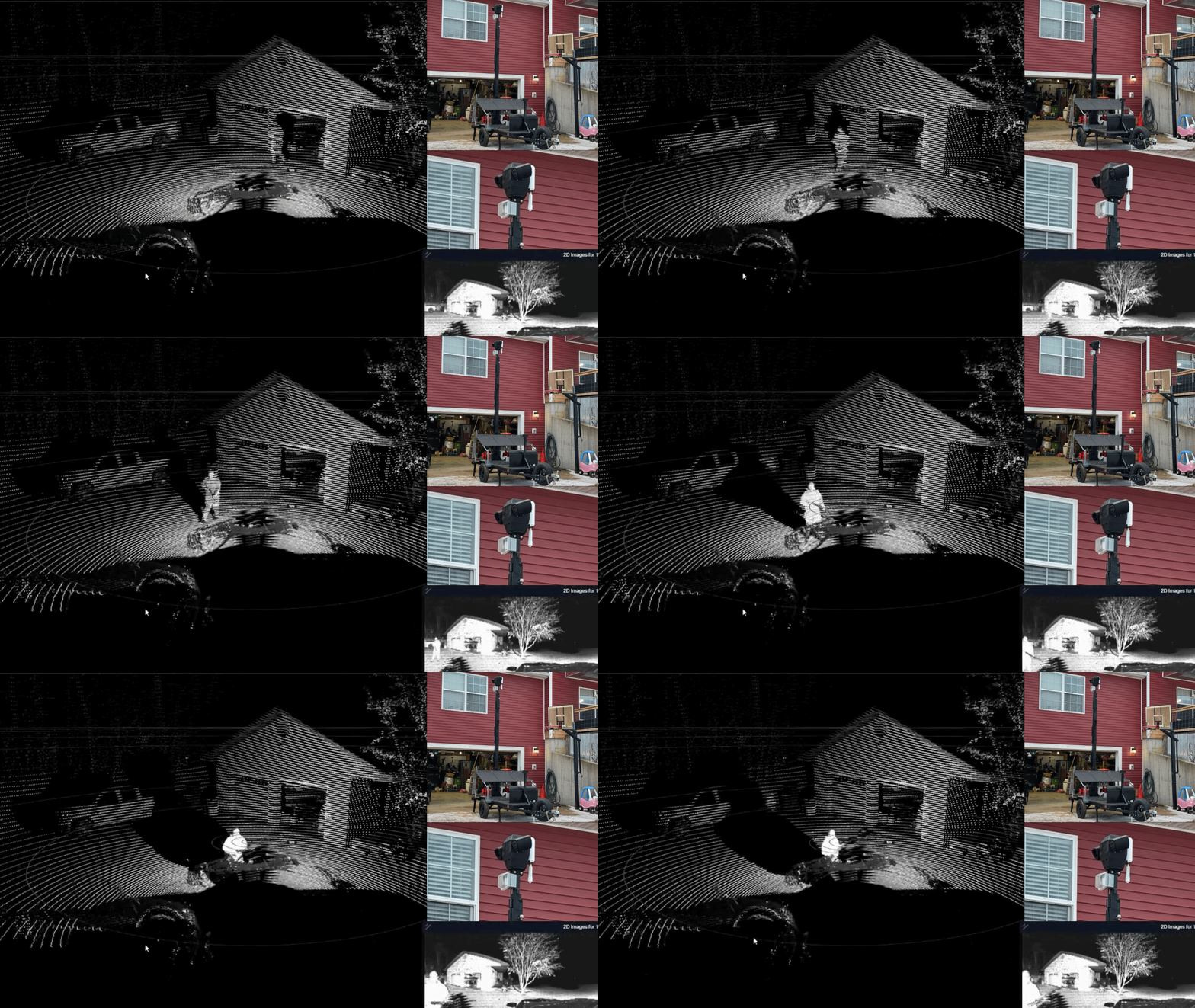
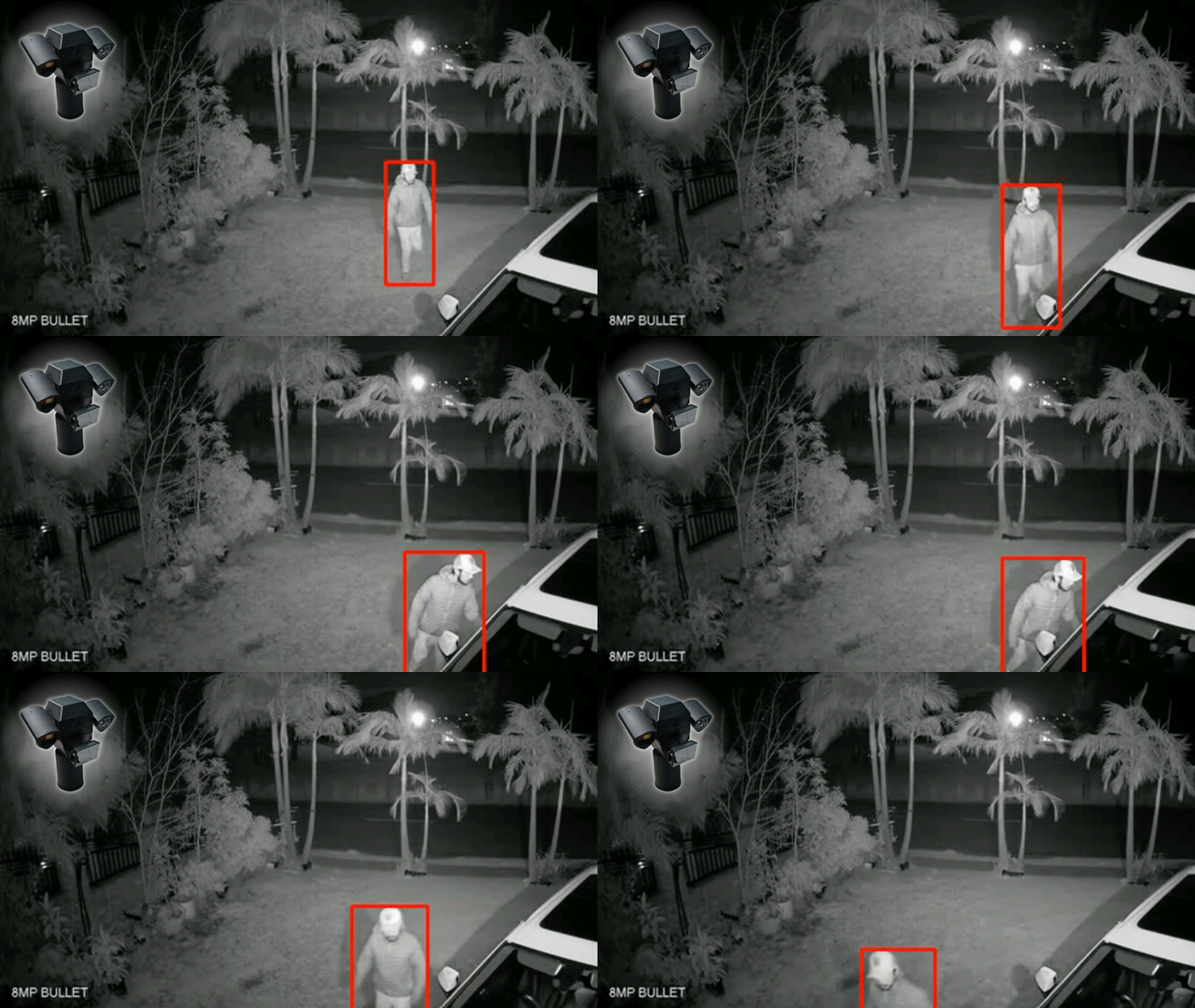
The 20-ft Scout AI Tower combines LiDAR-primary sensing with event-triggered cameras and on-device Adaptive AI via the Synapse AI Box. LiDAR scans the surrounding area continuously, mapping spatial geometry and detecting anomalous behavior patterns without capturing visual identity. Cameras activate only when LiDAR confirms a potential threat, minimizing routine data collection.
Each tower operates as a self-contained security node that processes all analytics on-device. No centralized servers are required, which dramatically reduces deployment cost and IT complexity. Towers communicate through the Kepler platform to share threat data and coordinate coverage across a multi-tower campus deployment.
A single tower can secure what previously required dozens of fixed cameras and a full-time monitoring team. The self-contained design means a university can deploy its first tower in hours and scale to full campus coverage incrementally, aligning expenditure with available budget cycles.Highlight
03Operational Impact.
Campuses that have deployed the system report measurable improvements in response times and detection accuracy. The LiDAR-first approach has resolved long-standing coverage gaps in parking structures, open quads, and building perimeters. False-alarm rates are substantially lower than camera-only systems because the multi-sensor validation pipeline filters noise before it reaches security personnel.
Student acceptance has been notably positive. Because routine monitoring is non-visual, the system avoids the surveillance fatigue and privacy objections that have stalled camera expansion programs at other institutions. Administrators report that the AI-powered threat detection has become an asset in recruitment, demonstrating a commitment to both safety and student rights.
04Looking Ahead.
The 20-ft Tower gives universities the ability to scale proactive threat detection across their entire footprint without the infrastructure cost or privacy trade-offs of traditional surveillance. As Skylark Labs' adaptive AI models continue to evolve with operational data, detection accuracy and autonomous response capabilities will only improve with each semester of deployment.