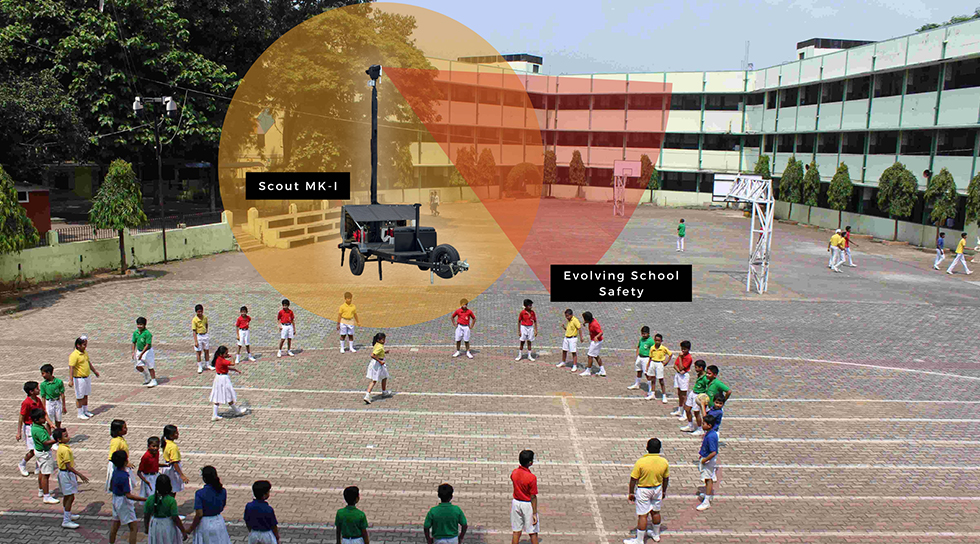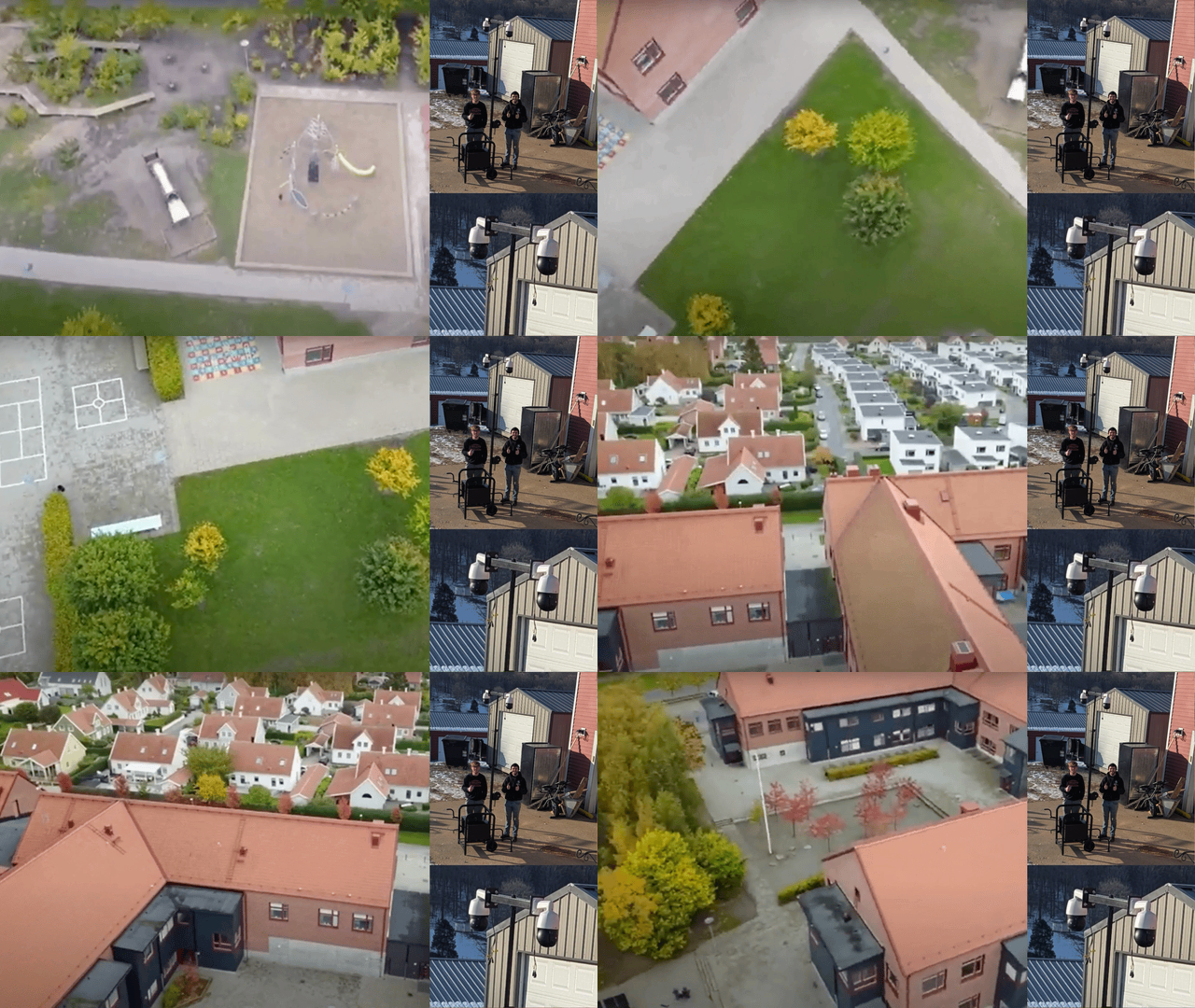
Active shooter incidents in American schools have exposed critical failures in traditional security infrastructure. Skylark Labs' adaptive AI platforms shift the paradigm from reactive recording to proactive detection, identifying weapons and aggressive behavior before a threat can escalate. The Scout AI Tower and edge AI technology deliver this capability at a cost schools can actually afford.
01The Reactive Security Problem.
The vast majority of school security systems are reactive. Cameras record footage that is reviewed after an incident occurs. Metal detectors create bottlenecks at entry points but cannot scan outdoor approaches or detect threats at range. Security personnel are limited in number and cannot maintain persistent coverage across an entire campus. The result is a security posture that documents violence rather than preventing it.
The human cost of these failures is well documented. The gap between the moment a weapon appears on campus grounds and the moment security can respond is measured in minutes, while the most devastating incidents unfold in seconds. Closing this gap requires technology that detects threats before entry, not systems that record them during or after an attack.
The difference between reactive and proactive security is measured in seconds. Those seconds determine outcomes.Dr. Amarjot Singh, CEO of Skylark Labs
02Proactive Detection with AI-Driven Towers.
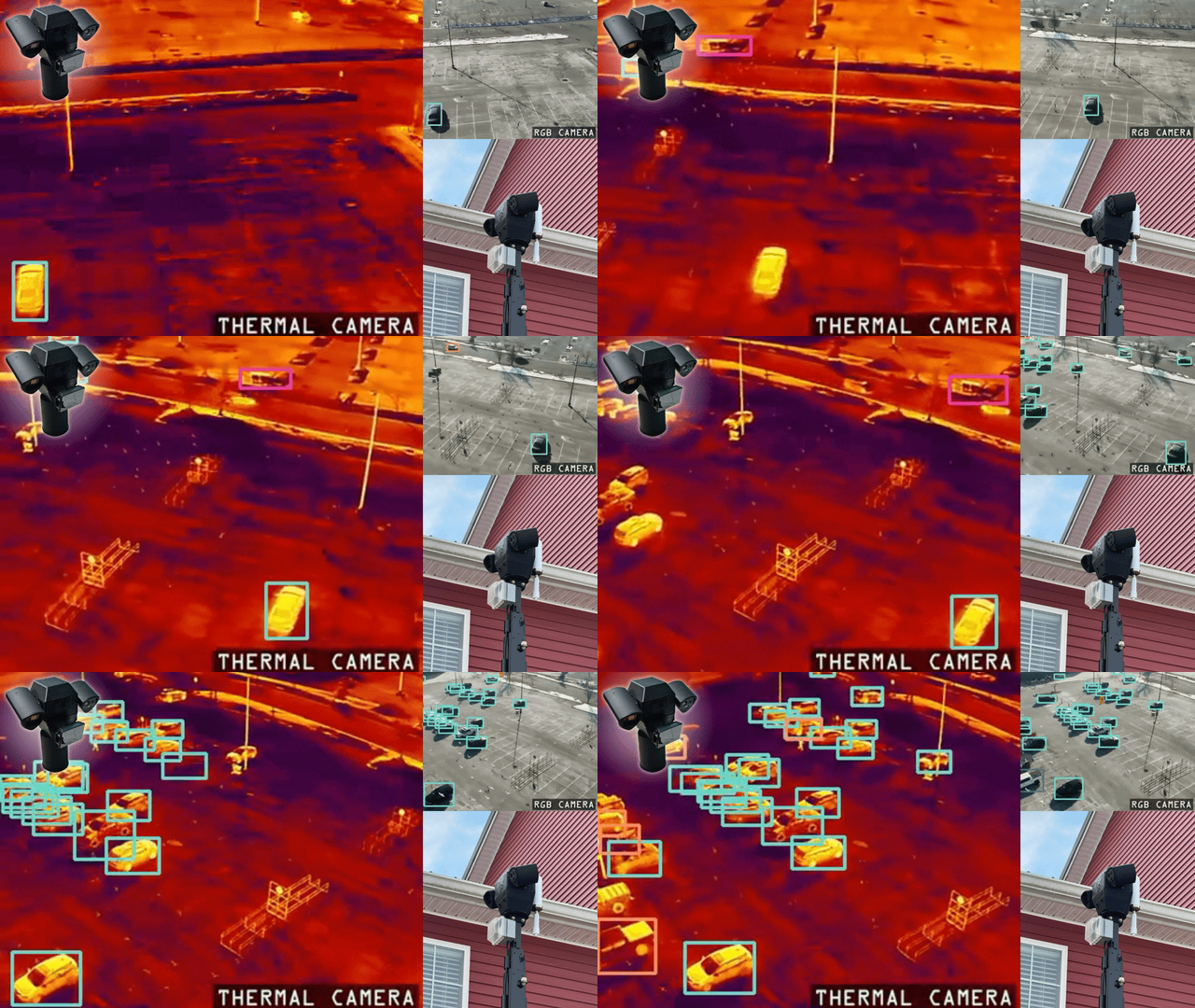
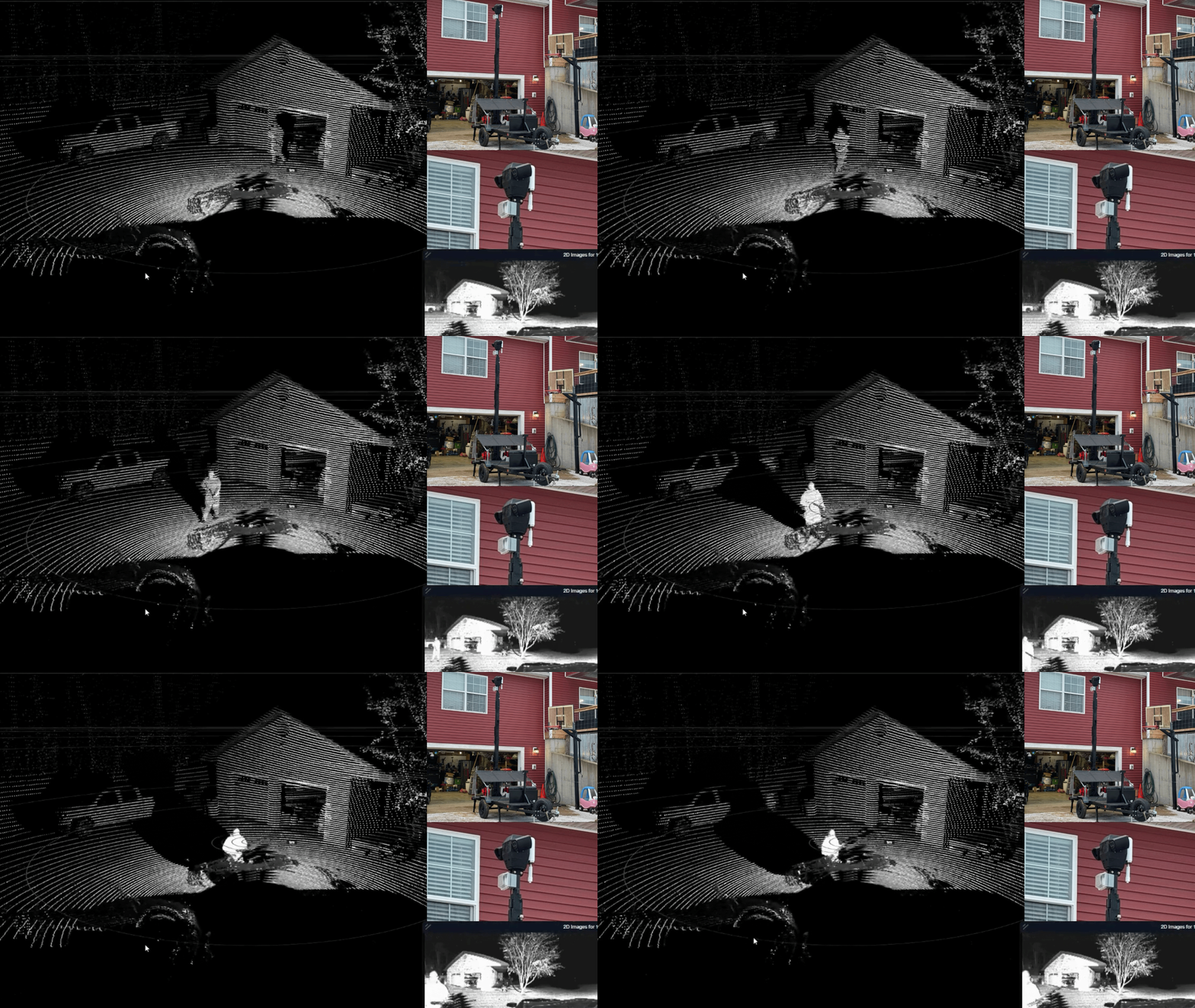
The Scout AI Tower deploys outside school buildings to detect weapons, vehicles, and aggressive behavior at the perimeter level. LiDAR scans continuously, mapping the spatial environment and flagging anomalous objects or movement patterns. When a potential threat is identified, event-triggered cameras activate to provide visual confirmation, and the Synapse AI Box generates an immediate alert to school security and law enforcement.
The system processes all analytics on-device at the edge. There are no cloud dependencies, no server rooms, and no ongoing subscription costs. The Kepler platform pushes updated detection models over the air, so the system improves continuously without hardware changes.
Pre-entry detection is the critical differentiator. By identifying weapons and threatening behavior at the campus perimeter rather than inside the building, the system provides minutes of advance warning instead of seconds of post-breach recording. This is the difference between lockdown and intervention versus documentation and aftermath.Highlight
03Operational Impact.
Schools deploying the system report that the combination of perimeter-level detection, automated alerting, and AI-powered threat classification has fundamentally changed their security posture. Response plans now begin at the point of threat detection rather than the point of breach, providing actionable lead time for evacuation, lockdown, or law enforcement engagement.
The system's privacy-first architecture has also addressed community concerns. Because the LiDAR-primary approach does not record visual identity during routine monitoring, administrators have found strong support from parents, teachers, and students for a security system that protects without surveilling.
04Looking Ahead.
AI-driven perimeter detection represents the most significant advancement in school security in a generation. By shifting from reactive to proactive, and from camera-first to LiDAR-first, Skylark Labs is enabling schools to detect and respond to threats before they reach students. The adaptive AI at the core of the system ensures that detection accuracy improves with every deployment, making each protected campus part of a growing intelligence network.