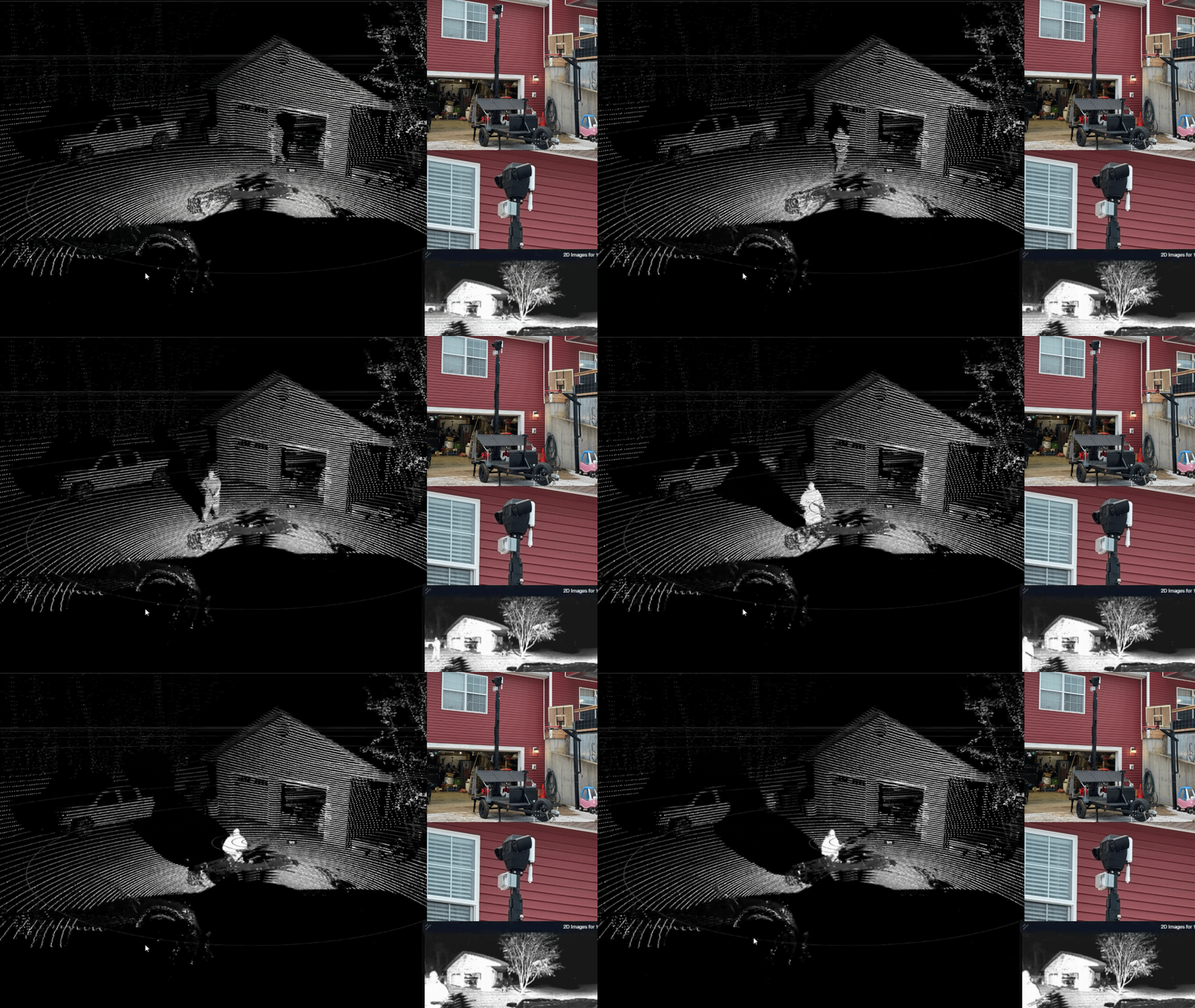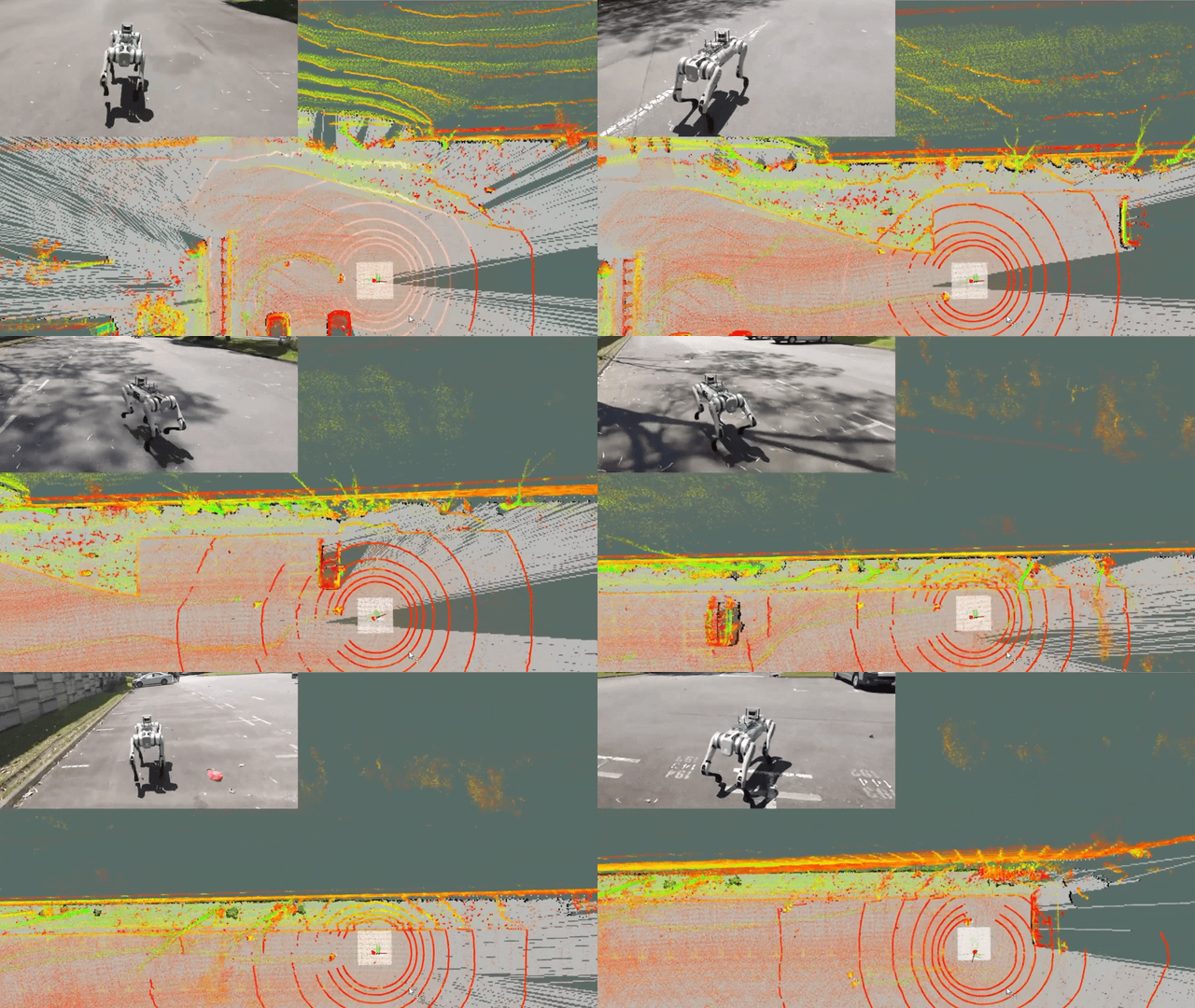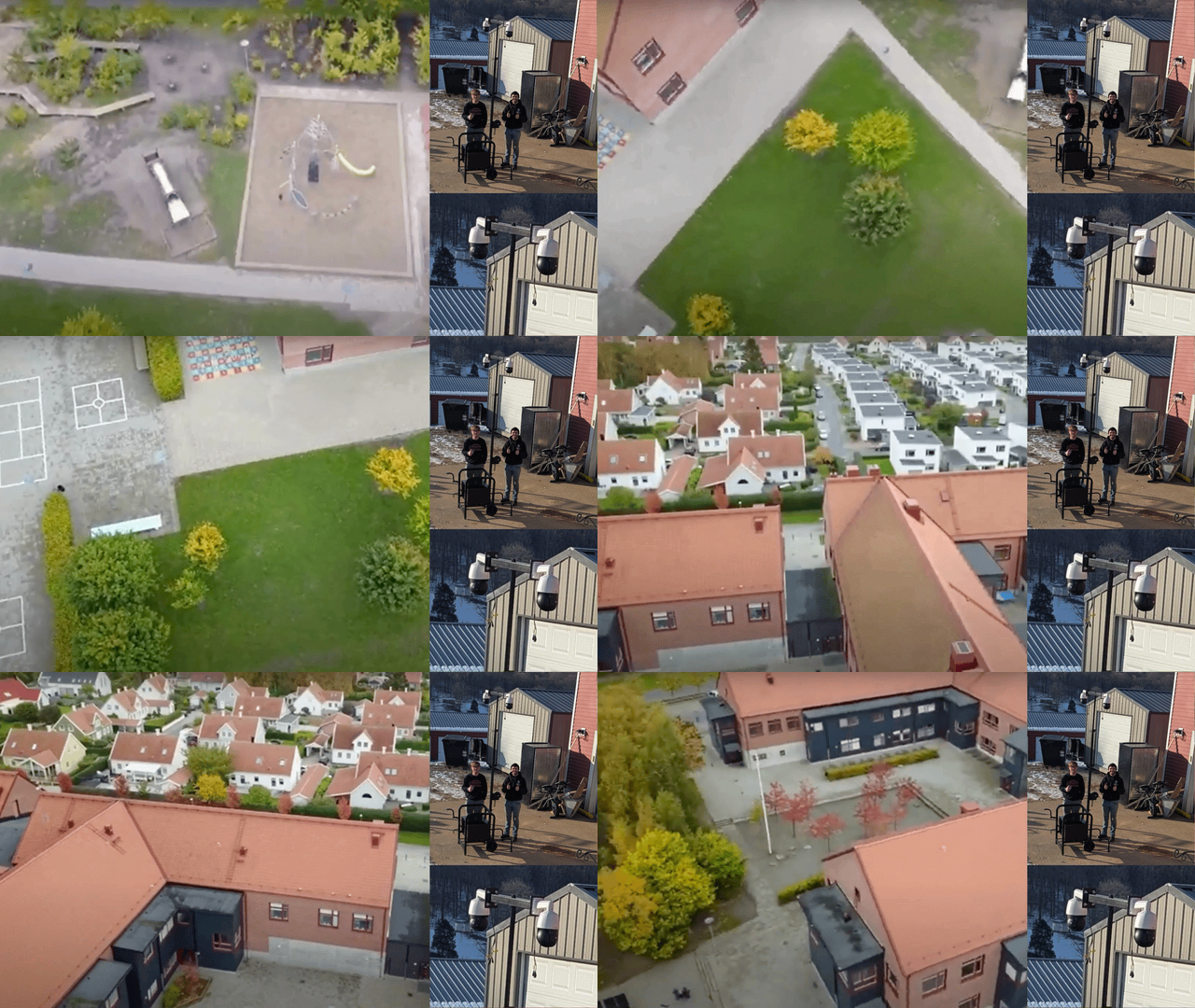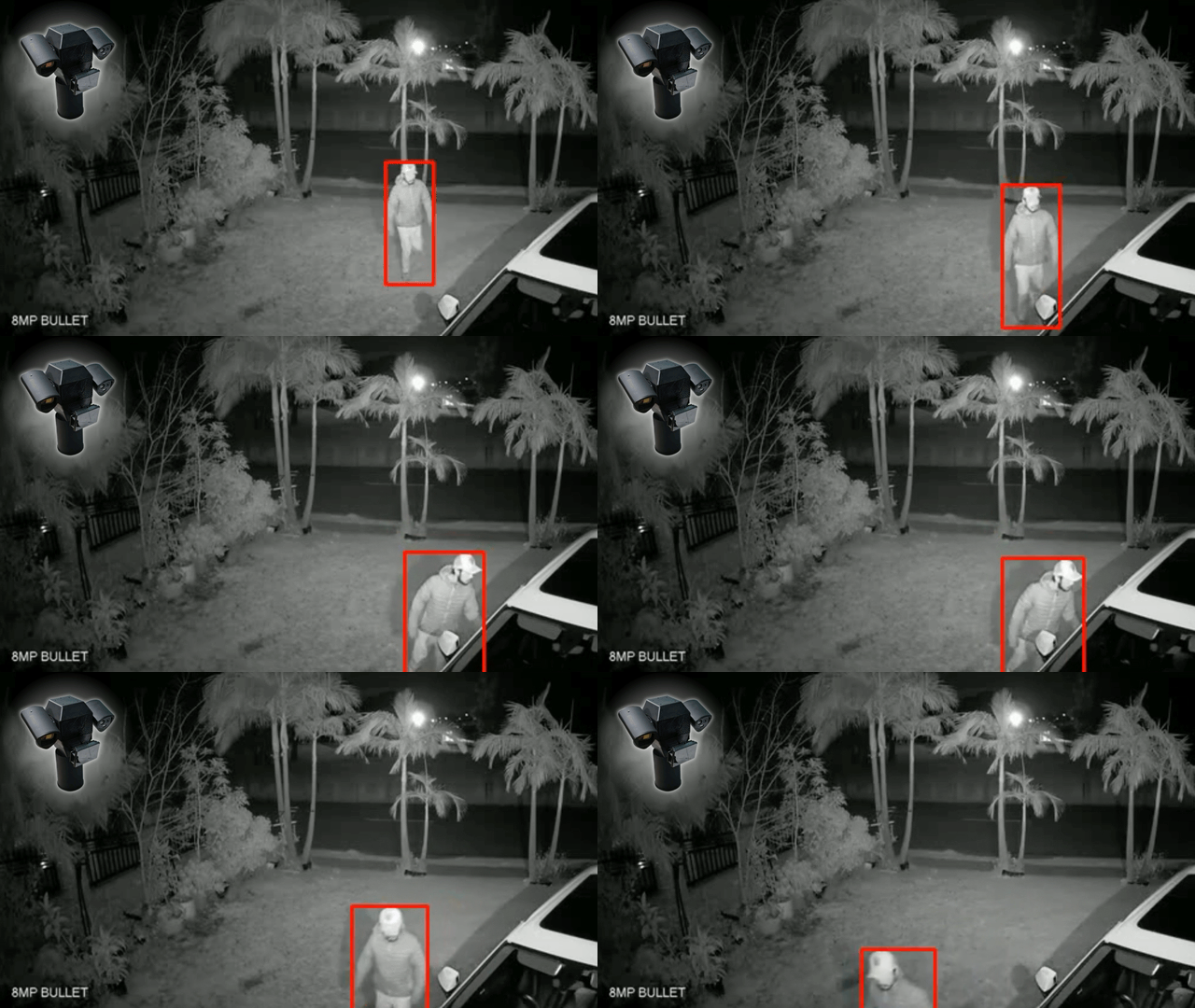
Adaptive AI towers address the core challenges of modern public safety: bias, delayed response, and limited scalability. By placing LiDAR at the center of the sensing architecture, Skylark Labs delivers surveillance infrastructure that communities can trust, built on the CFAMs framework.
01Why Traditional Public Safety Systems Fall Short.
Conventional surveillance relies on camera-only architectures that introduce bias, require constant human monitoring, and scale poorly across diverse environments. Camera-first systems can inadvertently discriminate based on appearance or ethnicity, while static architectures lack the responsiveness to flag threats in real time. Human-dependent monitoring increases response latency during critical incidents.
The rise of LiDAR-based detection offers a fundamentally different approach. By sensing spatial geometry rather than visual appearance, a LiDAR-first architecture eliminates the profiling inherent in camera-dependent systems. When combined with edge AI processing, the result is threat detection that is faster, more accurate, and free from the demographic biases that erode public trust.
When you lead with LiDAR instead of cameras, you remove the bias entirely. The system sees geometry, not identity.Dr. Amarjot Singh, CEO of Skylark Labs
02LiDAR-First Surveillance Architecture.
The 20-ft Scout AI Tower combines LiDAR-primary sensing with event-triggered cameras and Adaptive AI. This approach delivers accurate, real-time monitoring across urban spaces, parks, and events while preserving individual privacy. LiDAR analyzes spatial geometry rather than visual appearance, eliminating profiling. Visual sensors via the Sentinel AI Camera activate only when LiDAR confirms an anomaly, minimizing unnecessary data capture.
Dynamic crowd analytics adapt in real time to shifting densities and movement patterns. The self-contained tower design deploys across diverse environments without fixed infrastructure, powered by the Synapse AI Box for on-device processing.
Event-triggered activation is what makes this architecture privacy-first. Cameras remain dormant until LiDAR detects a confirmed anomaly, meaning routine monitoring is entirely non-visual. This design directly addresses the concerns raised by communities about constant video surveillance in public spaces.Highlight
03Operational Impact.
Bias-free detection builds community confidence in surveillance systems. Automated threat identification reduces alert-to-action time significantly. Privacy-by-design ensures data collection only when warranted, and the system performs consistently across urban centers, parks, stadiums, and transit hubs.
Field deployments confirm that the LiDAR-first architecture establishes a new paradigm for ethical, efficient public safety monitoring. Operators report faster response cycles and higher detection accuracy compared to camera-only systems, with dramatically reduced false-positive rates attributed to the multi-sensor validation approach.
04Looking Ahead.
By placing LiDAR at the center of the sensing architecture, these towers eliminate detection bias while delivering real-time situational awareness. The result is public safety infrastructure that communities can trust. As Skylark Labs continues to refine the CFAMs models powering these towers, each deployment cycle improves the system's ability to distinguish genuine threats from routine activity.