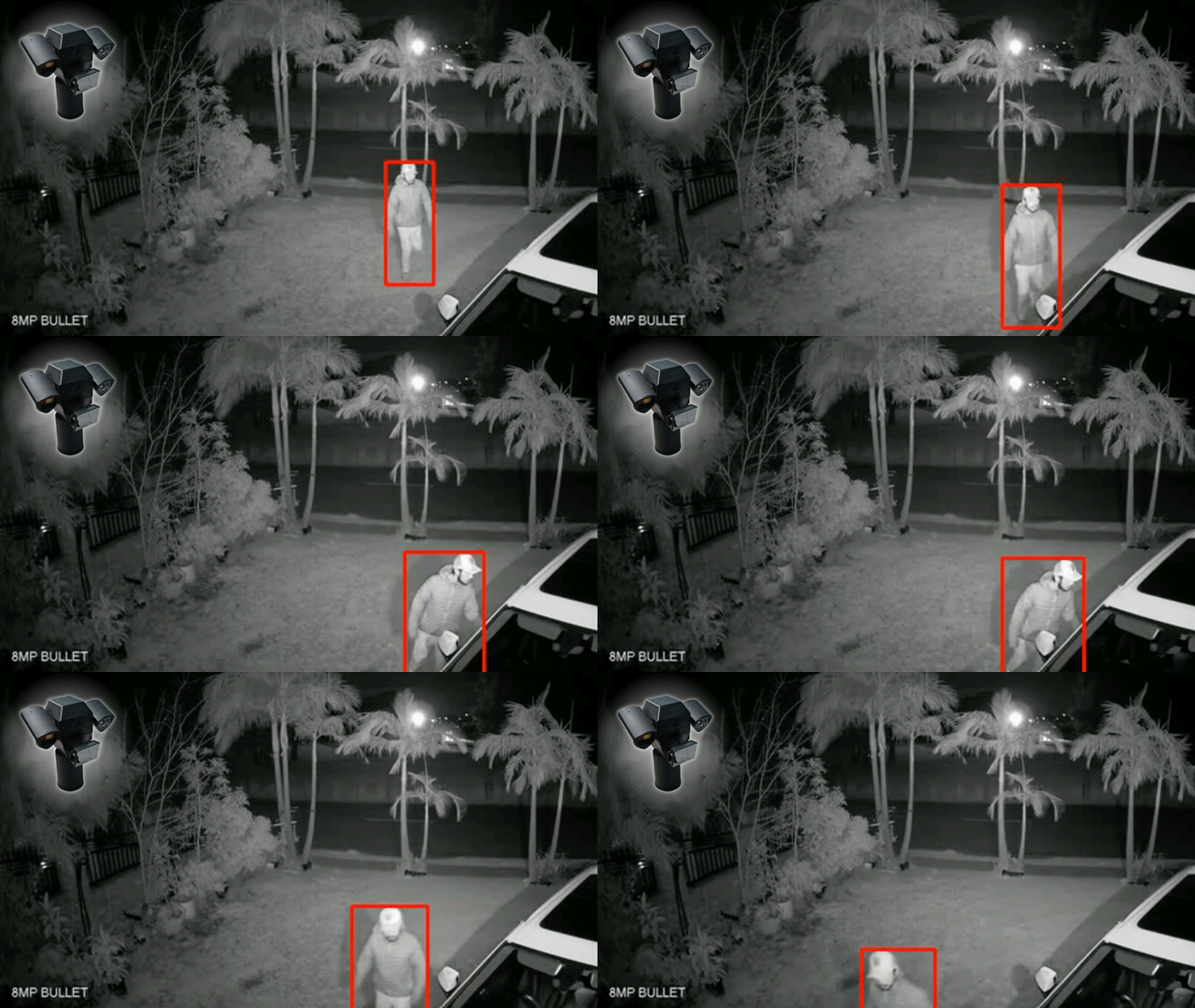
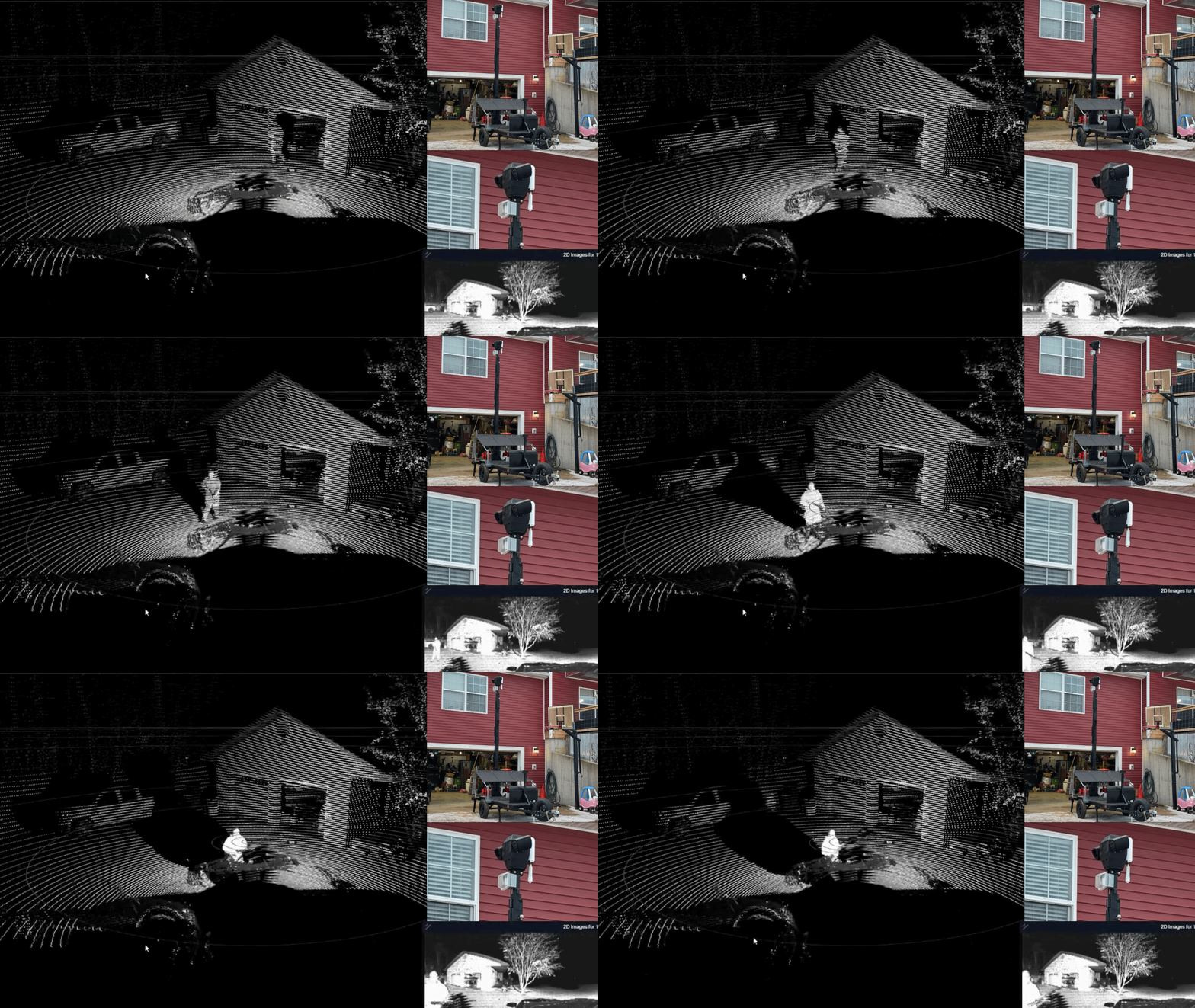
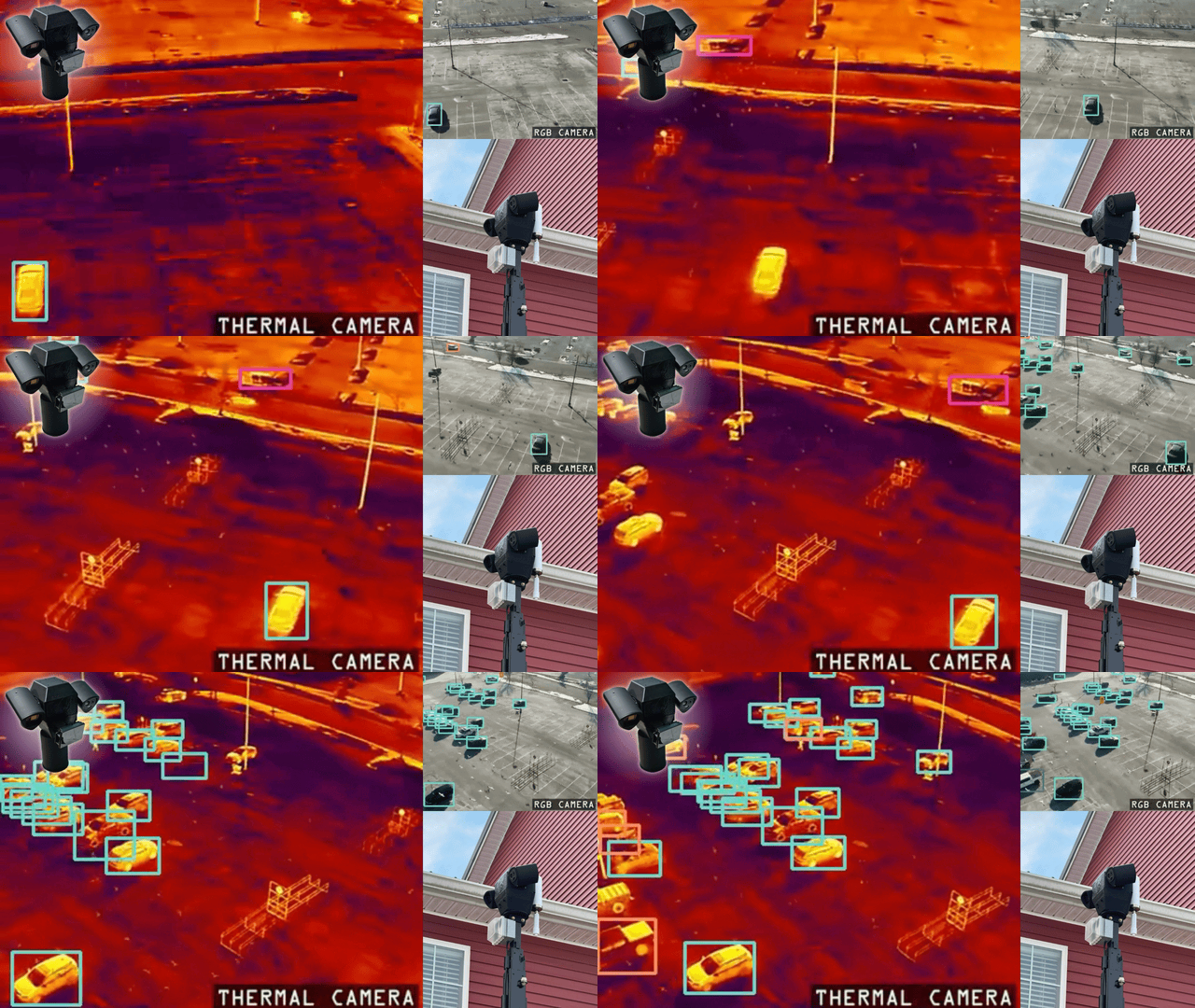
Fixed cameras leave blind spots. The Unitree Robot Dog pairs adaptive AI with four-legged mobility to deliver situational awareness where static systems cannot reach. By integrating multi-sensor arrays with autonomous navigation, Skylark Labs transforms robotic platforms into mobile intelligence units for public safety and perimeter security.
01Why Static Surveillance Falls Short.
Conventional camera networks are bolted in place. They cannot follow an incident, navigate rough terrain, or adapt to a changing environment in real time. A fixed surveillance camera covers a predetermined field of view, but once a subject moves beyond that cone, the system is blind. Manual patrols attempt to fill these gaps, but they are costly, inconsistent, and unable to maintain persistent coverage across large or complex sites.
The emergence of robotic security platforms addresses this limitation directly. Unlike wheeled robots confined to flat surfaces, quadruped platforms can traverse stairs, rubble, slopes, and uneven ground that would stop any tracked or wheeled system. When combined with edge AI processing, these platforms become autonomous sensing nodes that actively hunt for threats rather than passively recording footage.
When surveillance can walk, climb, and think, the concept of a blind spot disappears.Dr. Amarjot Singh, CEO of Skylark Labs
02Mobile Intelligence on Four Legs.
The Unitree Robot Dog fuses onboard sensors with adaptive AI to patrol autonomously, navigate complex terrain, and relay real-time intelligence to operators. Radar, LiDAR, and cameras provide 360-degree environmental awareness, processed on the Synapse AI Box mounted directly on the platform. The system identifies anomalies, classifies threats, and generates geotagged alerts without requiring a human operator to review raw video feeds.
Cross-industry deployment is a key advantage. The same platform that patrols an industrial perimeter at night can be redeployed to a disaster response zone or a campus security operation within hours. Its modular sensor payload adapts to mission requirements, and Kepler platform software updates push new detection models over the air.
Multi-sensor integration is central to the design. Radar provides all-weather detection, LiDAR maps spatial geometry for navigation and anomaly detection, and visual cameras deliver identity-level detail when triggered. This layered approach means the robot dog maintains operational effectiveness in conditions that would degrade any single-sensor system, from dense fog to complete darkness.Highlight
03Operational Impact.
The shift from static to mobile surveillance fundamentally changes how security operations are planned and executed. A single robot dog covers areas that previously required multiple fixed cameras and regular human patrols, reducing both equipment costs and personnel requirements. Its ability to move toward incidents autonomously shrinks time-to-response from minutes to seconds.
Multiple units coordinate through the Kepler platform to cover large or complex facilities, sharing detection data and dynamically adjusting patrol routes based on real-time threat analysis. Field operators in public safety and defense programs report that the platform's terrain agility and persistent operation have eliminated coverage gaps that existed for years under fixed-camera architectures.
04Looking Ahead.
The Unitree Robot Dog closes the gap between static observation and active response. By putting AI-driven sensors on a mobile platform, Skylark Labs delivers the kind of adaptive, terrain-agnostic surveillance that fixed infrastructure cannot provide. As the platform's AI models continue to train on operational data, detection accuracy and autonomous decision-making only improve with each deployment cycle.