Snow, ice, and sub-zero temperatures render most surveillance systems ineffective. Skylark Labs' all-weather AI monitoring maintains continuous situational awareness in high-altitude and arctic environments where conventional sensors fail. By combining multi-sensor surveillance towers with adaptive AI, these systems deliver uninterrupted border security exactly when and where threats are hardest to detect.
01Why Harsh Winter Conditions Break Conventional Surveillance.
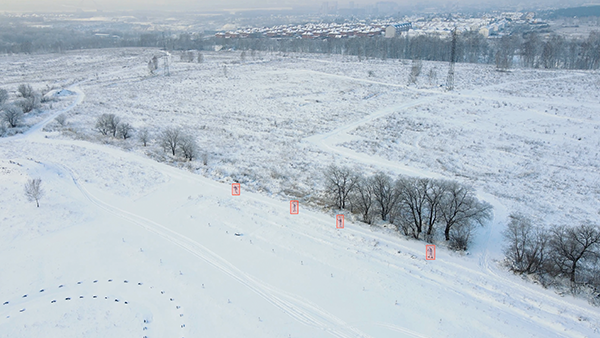
High-altitude border regions and arctic installations face surveillance challenges that no amount of conventional camera technology can solve. Snow accumulation buries ground sensors, ice formations crack optical housings, and sustained sub-zero temperatures cause mechanical components to seize and batteries to drain at accelerated rates. Even when hardware survives, the visual environment itself becomes hostile to detection: snow-covered landscapes eliminate the contrast that optical cameras depend on, making it nearly impossible to distinguish a moving figure from the white terrain behind it.
The problem extends beyond equipment failure. Remote, snow-covered terrain makes routine maintenance impractical — technicians may need days to reach a failed sensor station, leaving gaps in coverage that adversaries can exploit. Manual patrols in these conditions expose personnel to frostbite, avalanche risk, and altitude sickness, while delivering only intermittent coverage of a fraction of the perimeter. The result is a fundamental vulnerability: the most strategically important border zones — mountain passes, glacial corridors, high-altitude ridgelines — are precisely the locations where traditional surveillance is weakest.
When everything is covered in snow and temperatures drop below minus thirty, you need sensors and AI that were designed for exactly those conditions. Conventional systems fail; adaptive systems thrive.Dr. Amarjot Singh, CEO of Skylark Labs
02How All-Weather Surveillance Works.
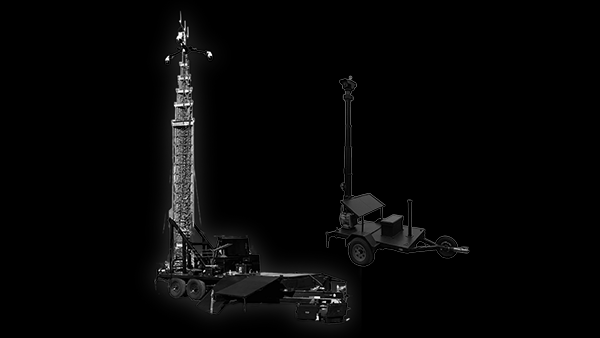
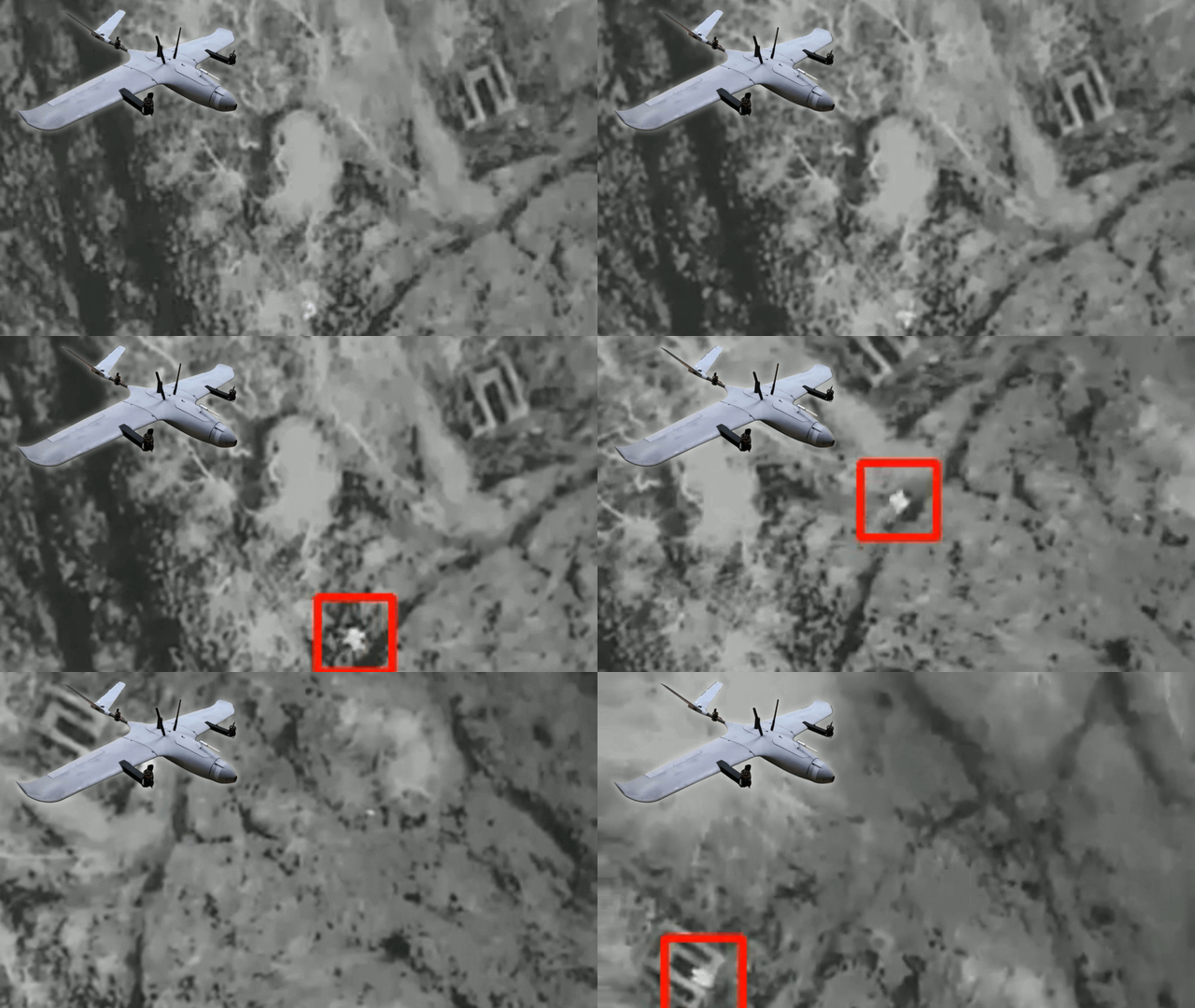
Multi-sensor surveillance towers combine thermal imaging, radar, and AI analytics in ruggedized enclosures designed for sustained operation in extreme cold and snow. Thermal detection identifies heat signatures against snow backgrounds where optical cameras lose all contrast — a human body at 37 degrees Celsius stands out sharply against a frozen landscape at minus 30. Radar provides a complementary detection layer that penetrates snow, fog, and blizzard conditions that would blind even the best thermal imager.
The AI layer goes beyond simple detection to deliver motion analytics that distinguish human and vehicle movement from environmental noise. Blowing snow, drifting ice, and wildlife generate constant false alarms on conventional systems — the AI models, trained on thousands of hours of arctic operational data, filter these out while flagging genuine security events with geotagged coordinates and timestamps ready for command integration.
AI-powered sensor fusion is the critical differentiator. Rather than treating each sensor as an independent feed, Skylark Labs' Kepler platform correlates thermal, radar, and visual returns into a single situational picture. When one modality degrades — blowing snow obscuring thermal contrast, ice accumulation on radar antennas — the system automatically re-weights the remaining channels to maintain detection accuracy. This adaptive intelligence means coverage never drops to zero, even in the worst conditions.Highlight
03Arctic-Grade Hardware and Autonomous Operation.
Surviving extreme cold requires more than weather-resistant housings. Skylark Labs' Scout AI Towers deployed in arctic environments feature heated enclosures that maintain internal operating temperatures even when exterior conditions drop to minus 40 degrees Celsius. Reinforced mechanical components — sealed bearings, insulated wiring harnesses, cold-rated lubricants — prevent the seizure failures that plague standard pan-tilt-zoom assemblies in prolonged freeze conditions. Power systems incorporate battery management designed for extreme cold, with solar charging optimized for the low sun angles characteristic of high-latitude deployments.
Autonomous operation is not a convenience feature in these environments — it is a necessity. Remote, snow-covered locations may be accessible only by helicopter for months at a time, making manual maintenance impractical. The towers operate self-sufficiently with onboard edge AI processing, transmitting only alerts and compressed intelligence products rather than raw video feeds. This minimizes bandwidth requirements over satellite links that may be the only communication option at extreme altitudes, while ensuring that intelligence reaches command centers within seconds of detection rather than hours.
04Operational Results in Snow-Covered Environments.
Deployments in high-altitude border zones have validated the system's ability to maintain continuous threat detection through blizzards, whiteout conditions, fog, and complete darkness. Multi-sensor redundancy eliminates the blind spots that weather events create for single-modality systems — when a blizzard degrades thermal performance, radar maintains tracking, and when ice accumulation affects radar returns, thermal detection compensates. The AI engine manages these transitions automatically, with no operator intervention required.
The reduction in personnel risk has been among the most significant outcomes. Automated monitoring eliminates the need for hazardous manual patrols in extreme conditions, protecting soldiers and security personnel from the environmental dangers inherent in high-altitude winter operations. A single autonomous tower network covers perimeters that previously required continuous patrol rotations, freeing personnel for response duties rather than observation. Field operators report that the system's ability to maintain detection accuracy in sustained sub-zero operations — where conventional AI border systems would degrade or fail — has been the decisive factor in sustaining coverage through entire winter seasons without gaps.
05Eliminating the Winter Vulnerability.
All-weather surveillance eliminates the seasonal vulnerability that snow and extreme cold create for border security. By combining thermal sensing, radar, and adaptive AI in ruggedized platforms, Skylark Labs delivers reliable monitoring exactly where and when conventional technology fails. As Arctic regions become increasingly strategic — with expanded shipping routes, resource competition, and military posturing — the ability to maintain persistent surveillance through the harshest conditions on earth is no longer optional. It is a strategic imperative, and the systems proving it are already operational in the field.