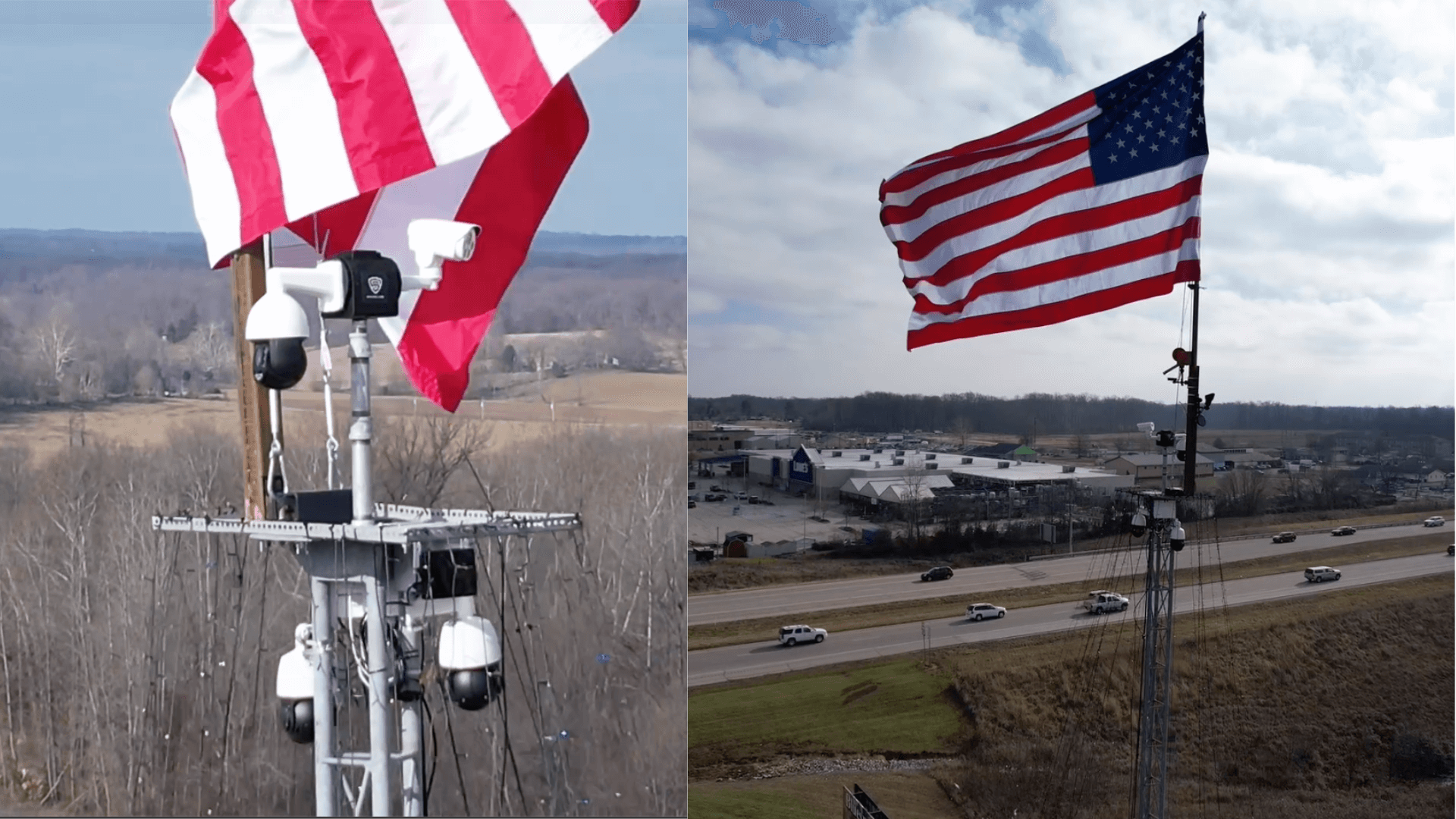
National borders stretch across vast, rugged terrain where traditional surveillance consistently fails. Skylark Labs' 160-ft AI-powered tower changes the equation by delivering persistent, all-weather monitoring at scale -- replacing dozens of fixed cameras with a single elevated platform that sees further, thinks faster, and never stops watching.
01Why Conventional Border Monitoring Falls Short.
Border regions demand continuous coverage across difficult terrain and extreme climates. Legacy systems -- ground-level cameras, static sensor posts, and manual patrols -- leave gaps that adversaries routinely exploit. The sheer scale of international borders makes comprehensive ground-level monitoring physically impossible. Thousands of kilometers of frontier pass through mountains, deserts, dense forests, and river valleys where fixed infrastructure cannot reach and human patrols cannot sustain presence. As the U.S. Department of Homeland Security has documented, AI-augmented surveillance is becoming essential for managing border security at scale.
Adverse weather compounds the challenge. Extreme temperatures, storms, and low-visibility conditions degrade conventional sensor performance precisely when threats are most likely to attempt crossings. Manual monitoring lacks the speed required for real-time threat identification, and round-the-clock human patrols are costly and difficult to sustain across remote areas. The result is a patchwork of surveillance that sophisticated adversaries can map and evade.
A single 160-ft tower replaces dozens of fixed cameras and provides situational awareness that was previously impossible in remote border terrain.Dr. Amarjot Singh, CEO of Skylark Labs
02How the 160-ft AI Tower Works.
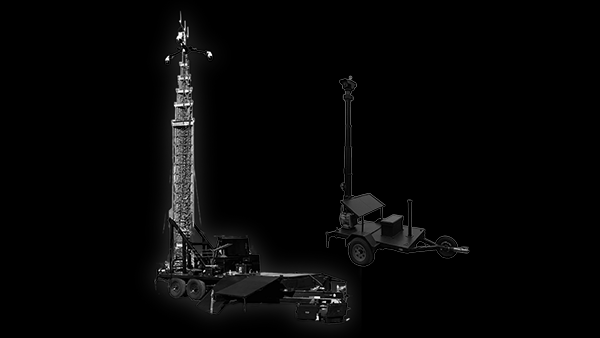
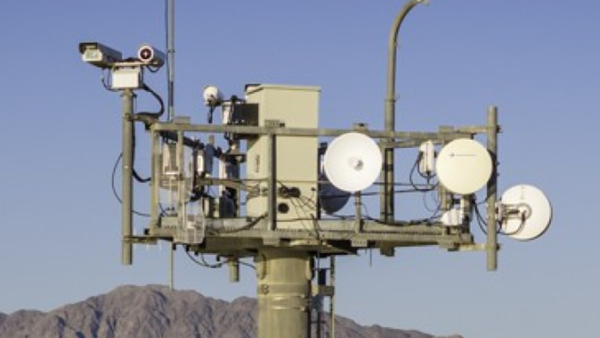
The tower integrates AI-powered cameras, radar, and thermal sensors into a single elevated platform, providing continuous situational awareness across kilometers of border terrain in any weather condition. At 160 feet, the platform achieves a line-of-sight advantage that fundamentally changes what is detectable. Ground-level obstacles that would blind conventional cameras -- terrain undulations, vegetation, and structures -- fall below the observation plane, exposing movement patterns that are invisible from the ground. The Kepler sensor fusion platform processes data from all sensor modalities simultaneously, correlating radar tracks with electro-optical confirmations and thermal signatures to produce verified threat assessments.
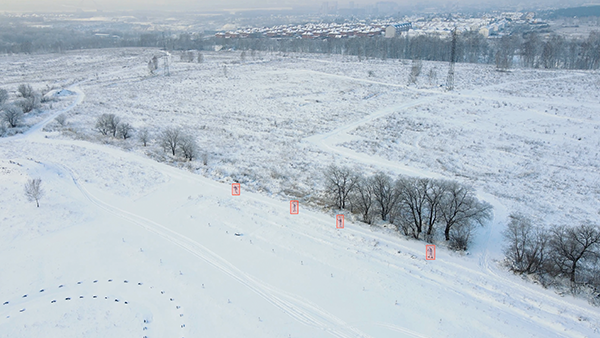
On-board algorithms filter environmental noise and false positives -- animals, vegetation movement, weather effects -- to deliver only actionable intelligence to command centers. Unauthorized movements trigger instant notifications with precise geolocation, classification, and recommended response protocols.
Multi-sensor fusion is the key differentiator. The tower combines radar for wide-area detection, thermal imaging for night and low-visibility operation, and high-resolution electro-optical cameras for identification. The Synapse AI Box processes this fused data stream at the edge, eliminating the latency of cloud-based analysis. Similar autonomous surveillance tower concepts are being deployed globally, validating the elevated multi-sensor approach for border security.Highlight
03All-Weather, All-Terrain Persistence.
Unlike ground-level systems that fail in adverse conditions, the 160-ft tower is engineered for continuous operation across the full spectrum of environmental challenges. Heavy rain, blowing sand, dense fog, and extreme temperatures -- the same conditions that adversaries exploit for concealment -- are precisely the conditions where the tower's multi-sensor approach provides its greatest advantage. When visible-light cameras are degraded by fog or rain, thermal sensors maintain detection capability. When thermal contrast is reduced during midday heat, radar continues tracking movement regardless of atmospheric conditions.
The tower's elevation provides additional resilience against terrain-based evasion tactics. Dry riverbeds, ravines, and depressions that provide concealment from ground-level observation are fully visible from 160 feet. The Scout AI Tower architecture ensures structural stability in high winds and extreme temperatures, with Sentinel AI Cameras maintaining calibration and focus despite vibration and thermal expansion. The system adapts to diverse border environments from snow-covered mountain passes to arid desert crossings.
04Force Multiplication and Resource Optimization.
The operational impact is measured in coverage area per deployed asset. A single 160-ft tower monitors the equivalent area of dozens of ground-level camera installations, dramatically reducing infrastructure, maintenance, and personnel requirements. This force multiplication effect allows border security agencies to reallocate human resources from routine monitoring to active response and investigation. Real-time AI analysis means that when a patrol is dispatched, it is directed to a verified threat with precise location data, classification information, and predicted movement trajectory -- eliminating the wasted deployments that plague sensor-triggered alert systems.
The CFAMs architecture enables the tower to learn from its operational environment over time. Movement patterns that initially generate alerts are progressively contextualized -- regular commercial traffic, wildlife migration routes, agricultural activity -- reducing false positive rates while maintaining sensitivity to genuine anomalies. This continuous learning loop means the system becomes more effective the longer it operates, a capability that static rule-based systems cannot match. Elbit America's relocatable tower programs have similarly demonstrated that elevated AI-powered surveillance can transform border security economics.
05The Future of Elevated Border Intelligence.
The 160-ft AI tower represents a fundamental shift in how nations approach border surveillance -- from scattered, ground-level monitoring to persistent, elevated intelligence platforms that see the full picture. As border threats evolve in sophistication, the advantage of height, multi-sensor fusion, and real-time AI analysis will only increase. Skylark Labs is continuing to expand the platform's capabilities, integrating drone coordination for dynamic response and advancing the Kepler platform's ability to correlate tower-level intelligence with ground-based sensor networks and regional security operations.