A single bolt on a carrier flight deck can destroy a jet engine and endanger lives. Skylark Labs deploys AI-powered Foreign Object Debris (FOD) detection that replaces manual walkdowns with continuous, automated monitoring — protecting aircraft, reducing costs, and keeping sortie rates high across naval operations.
01Why Manual FOD Detection Is Insufficient.
Carrier flight decks are among the most hostile operating environments on earth — and among the most demanding for safety. Foreign Object Debris appears constantly: bolts shed from aircraft, tools left by maintenance crews, fragments from catapult launches, debris blown in from the sea. Any of these objects, ingested by a jet engine during takeoff or landing, can cause catastrophic damage. The industry estimates FOD-related losses at approximately $13 billion annually, with incidents accounting for a significant share of total aircraft damage events.
The traditional countermeasure is the FOD walkdown — a line of crew members walking shoulder-to-shoulder across the flight deck, scanning the surface visually. This method is slow, labor-intensive, and fundamentally limited by human perception. Small objects — wire fragments, fastener heads, composite shards — are easily missed, especially under time pressure between launch and recovery cycles. Every minute spent on a walkdown is a minute the flight deck is unavailable for operations, directly impacting mission readiness and sortie generation rates.
Continuous AI monitoring means the flight deck is always being scanned. Crew no longer have to choose between speed and safety — the system delivers both simultaneously.Dr. Amarjot Singh, CEO of Skylark Labs
02How AI-Powered FOD Detection Works.
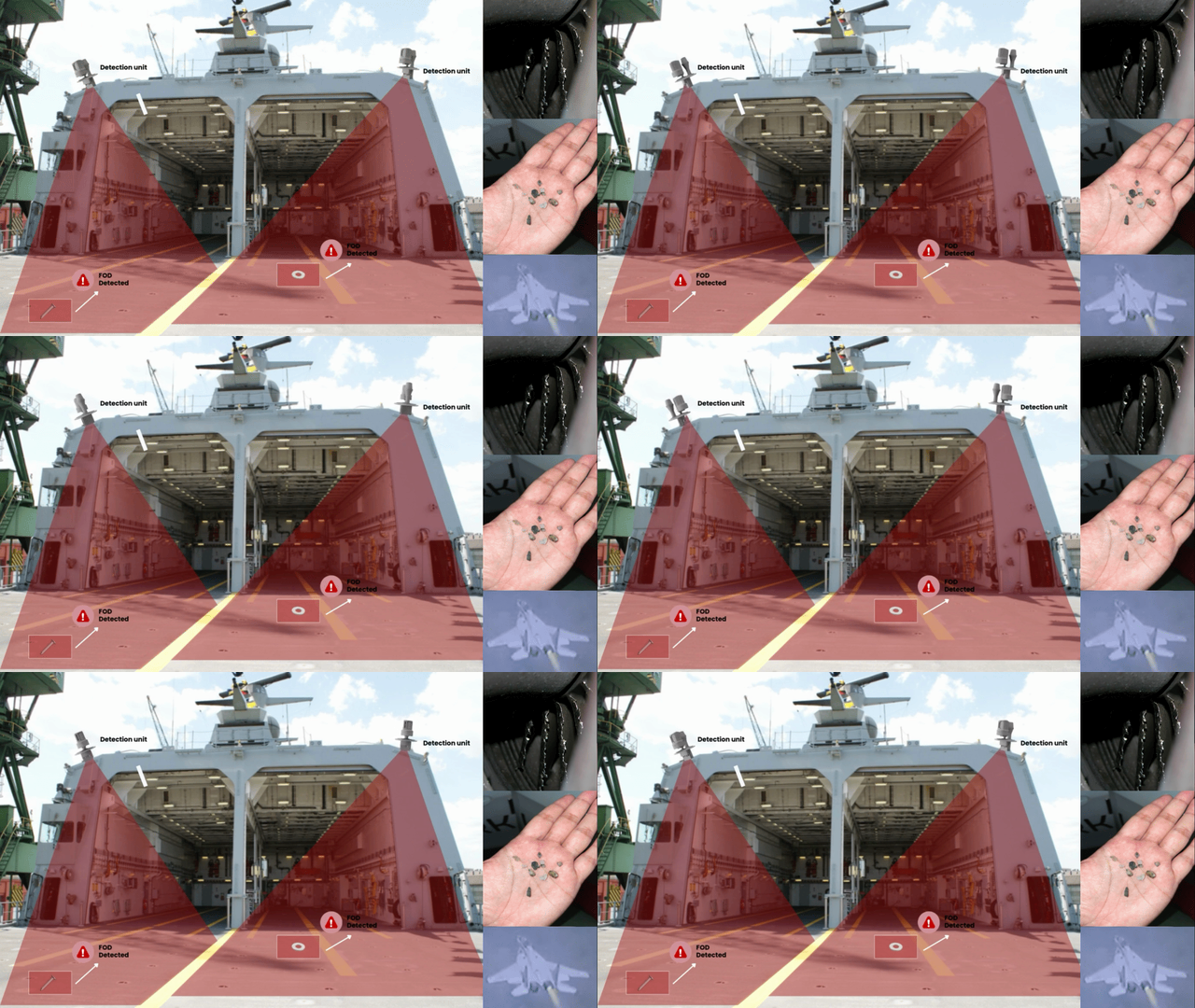
Ruggedized AI cameras mounted at strategic positions on the carrier continuously scan the flight deck surface, detecting and classifying debris in real time. Unlike traditional systems that rely on fixed-time inspections, the AI operates continuously — processing high-resolution imagery through convolutional neural networks trained to identify objects as small as a few centimeters against the textured deck surface. When debris is detected, alerts go directly to deck crew with precise location coordinates and classification data, enabling immediate removal without halting flight operations.
The system processes all data on edge AI hardware directly on the carrier, requiring no external connectivity. Every detection is time-stamped and geo-located within the deck coordinate system, creating a continuous audit trail for maintenance intelligence and pattern analysis.
Automated debris classification is what separates AI detection from simple motion sensing. The Kepler platform distinguishes between debris types — metal fasteners, composite fragments, tool components, organic material — and prioritizes alerts based on threat level. A loose bolt near a catapult track generates an immediate high-priority alert; a fabric scrap in a non-critical zone is logged but flagged at lower urgency. This intelligent triage ensures deck crews respond to the most dangerous debris first, maximizing both safety and operational efficiency.Highlight
03Maritime-Grade Resilience.
Carrier flight decks present environmental challenges that ground-based FOD detection systems never face. Salt spray corrodes exposed electronics. Constant vibration from catapult launches and arrested landings shakes mounting hardware. Wind speeds across the deck can exceed 50 knots during flight operations. Temperature swings from tropical heat to North Atlantic cold stress every component. Traditional sensor systems designed for airport runways fail rapidly in this environment.
Skylark Labs' hardware is engineered specifically for these conditions. Sealed, corrosion-resistant enclosures protect the Synapse edge AI processors and camera modules from salt, moisture, and debris impact. Anti-vibration mounting systems maintain camera alignment through the shock loads of catapult operations. The system operates reliably from -40 to +65 degrees Celsius, with automated self-diagnostics that alert maintenance crews if any sensor degrades. The result is detection infrastructure that matches the operational tempo of a carrier air wing — available when needed, regardless of sea state or weather.
04Measured Impact.
AI FOD detection delivers measurable improvements across every dimension of carrier flight deck operations. Continuous automated scanning catches debris that manual walkdowns miss — the system maintains detection accuracy through conditions where human vision fails, including low-light operations, rain, and spray. By eliminating the need for full-deck manual walkdowns between launch and recovery cycles, the system directly increases available flight deck time, supporting higher sortie generation rates without compromising safety.
The financial impact is equally significant. Preventing FOD ingestion avoids engine damage events that cost millions per incident in repairs and aircraft downtime. Over a deployment cycle, the cumulative savings in prevented damage, reduced maintenance overhead, and increased operational availability represent a substantial return on the detection system investment. The technology also scales across platforms — proven adaptable to other naval vessels, mobile FOD systems, and land-based aviation facilities.
Cross-platform scalability means the same AI models and hardware architecture deployed on carriers can be adapted for amphibious assault ships, land-based naval air stations, and allied partner facilities. As the Navy expands its AI strategy, FOD detection represents one of the most immediately deployable and high-impact use cases.Highlight
05The Future of Flight Deck Safety.
AI-powered FOD detection eliminates the trade-off between operational tempo and flight deck safety. Continuous automated scanning catches debris that manual inspections miss, protecting aircraft, reducing costs, and keeping sortie rates high. As AI models train on operational data from active carrier deployments, detection accuracy and classification precision improve with each cycle — the system becomes more effective the longer it operates.
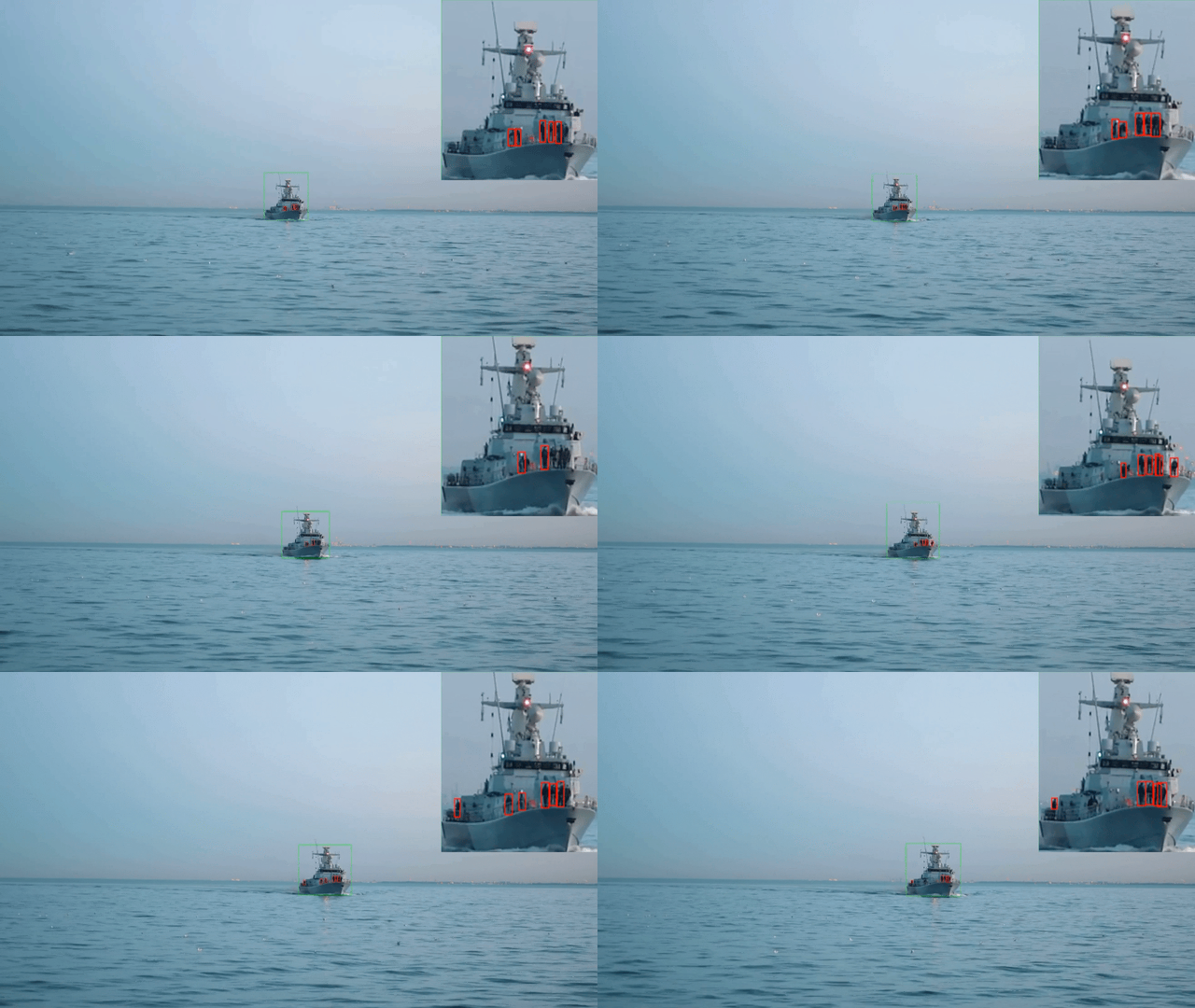
The next evolution integrates FOD detection with broader maritime surveillance capabilities — combining flight deck monitoring with perimeter security, ship recognition, and counter-UAS detection into a unified AI-powered situational awareness platform. Skylark Labs is building this integrated approach today, with FOD detection as the proven foundation of a comprehensive naval defense AI ecosystem.